Cheyenne winters bring hard freezes, snow and a wind that finds every gap in a house. A frozen line is an inconvenience, and a split one can soak a basement. This guide covers how to keep pipes from freezing with a little work in the fall, a few habits during cold snaps and a plan for when you leave town.
The short answer
Insulate pipes in crawl spaces, garages and outside walls. Seal drafts near them. Disconnect hoses and drain outdoor faucets before the first freeze. Keep the heat steady, open sink cabinets and let faucets drip on the coldest nights. Never let the house go unheated while you travel.
Why pipes freeze in the first place
A pipe freezes when the air around it stays below freezing long enough to chill the water inside. It is rarely the pipes in the middle of a warm room. The trouble spots are lines near cold air, especially where wind can blow across them.
Ice itself is not what splits a pipe. As the plug of ice grows, it squeezes the water between it and a closed faucet. That trapped pressure is what cracks copper, swells PEX fittings and breaks old galvanized joints. That is also why a dripping faucet helps, since it keeps pressure from building.
A fall checklist before the first hard freeze
Work through this list on a mild weekend in October, before the first cold night catches you out.
- Disconnect, drain and store every garden hose.
- Close the indoor valve for each outdoor faucet if you have one, then open the outside spigot so the stub drains.
- Drain sprinkler lines if the system has its own shut off.
- Walk the basement, crawl space and garage and note every exposed pipe.
- Find and test the main shut off valve so you can close it fast.
- Check that crawl space vents and access doors close properly.
- Seal gaps around pipes where they pass through walls and rim joists.
If an outdoor faucet leaked or split last winter, have it looked at now. Outdoor faucet repair can swap it for a longer, freeze resistant spigot that shuts off inside the warm part of the wall.
Insulation and heat cable
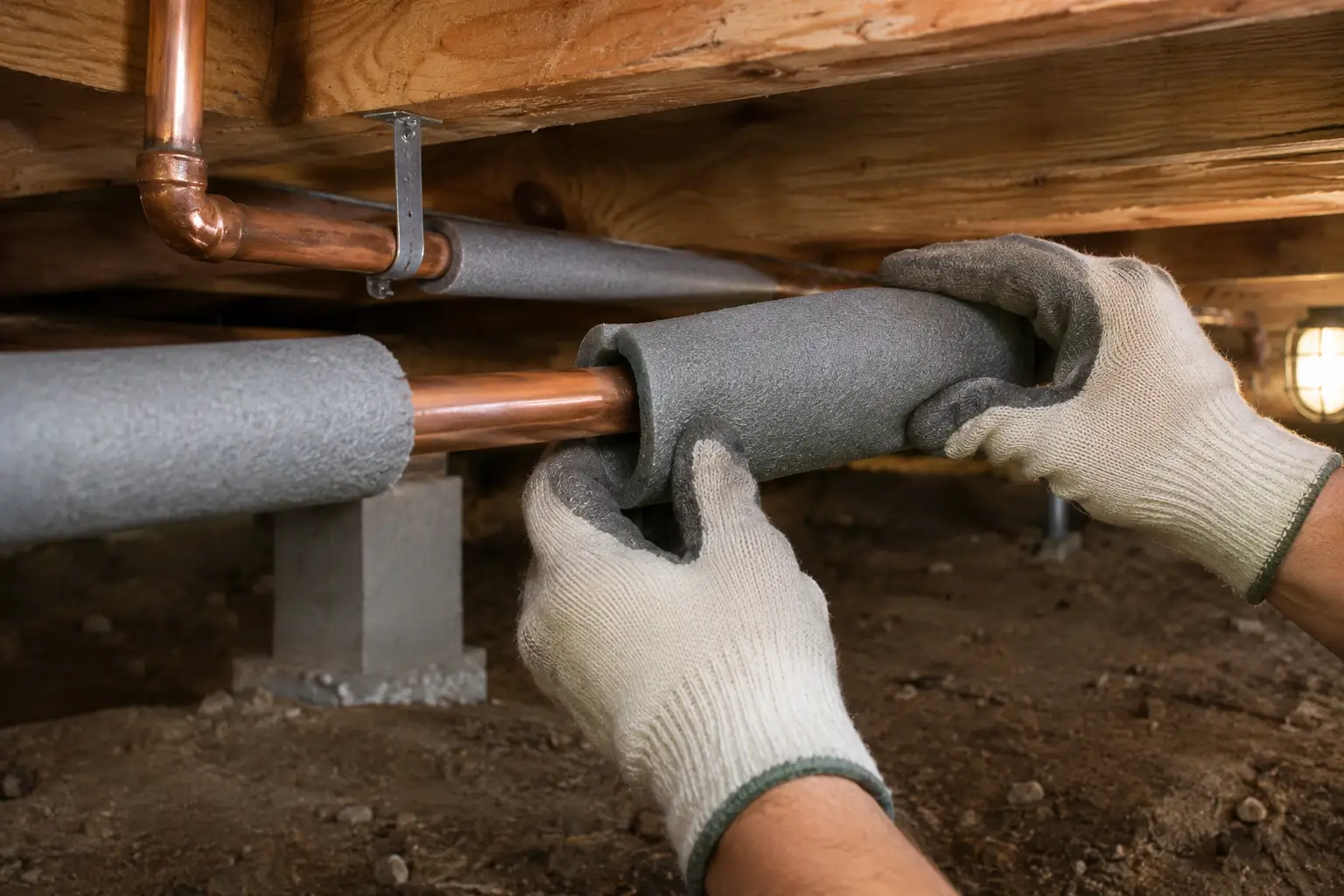
Foam sleeves. Split foam tubes slip over the pipe and close along a seam. Match the inside size to the pipe, tape the seams and joints, and cover elbows and valves too. Bare spots are where ice starts.
Heat cable. A pipe that sits in a spot you cannot warm, like a crawl space run near a vent, may need electric heat cable. Use a self regulating cable made for water pipes, follow its instructions exactly and plug it into a GFCI outlet. Never overlap a cable that the instructions say not to, and never bury it under the wrong kind of insulation.
Air sealing. Insulation slows heat loss, but a draft blowing on a pipe beats it every time. Foam the gaps first, then insulate.
Insulation does not make heat
A sleeve only slows the cold. On a pipe in an unheated space during a long freeze, it buys time but will not stop ice alone. Pair it with air sealing, heat cable or a warmer space.
How to keep pipes from freezing during a cold snap
When the forecast calls for a run of nights well below freezing, a few habits keep water moving and warm air reaching the lines.
Keep the heat steady
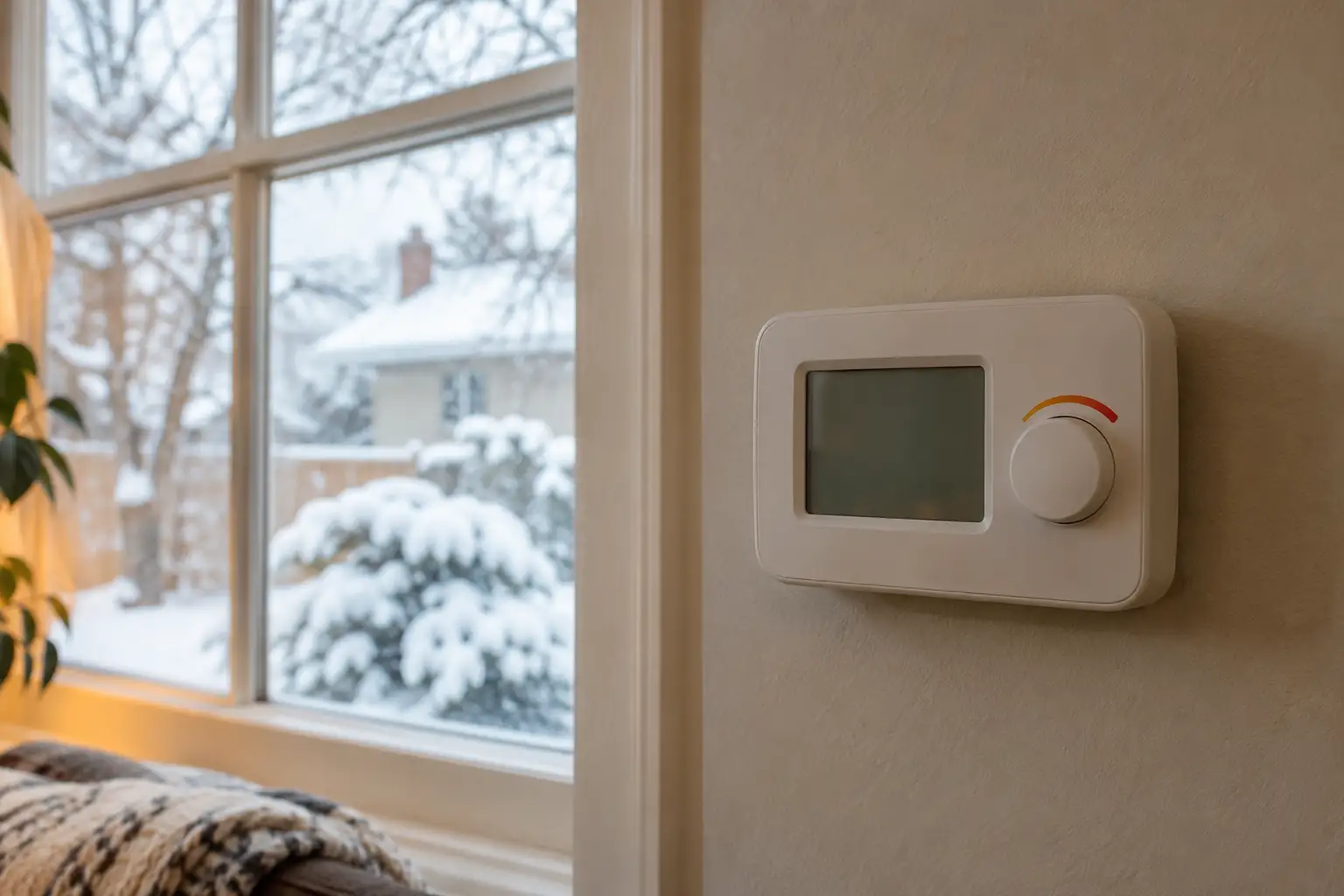
Hold the same setting day and night instead of turning it way down at bedtime. The furnace has to work harder to recover, and the coldest walls get colder first.
Open sink cabinets
On outside walls, open the doors so room air reaches the pipes. Move cleaning supplies out of reach of kids and pets.
Let faucets drip
A slow drip of both hot and cold at the faucets most at risk keeps pressure from building and water from sitting still.
Keep the garage door closed
Especially if water lines run through the garage or the water heater lives there.
Close crawl space vents
If your crawl space has vents that can be closed, shut them for the coldest stretch, and reopen them in spring.
Wind is the part people forget. A strong wind can freeze a pipe in a wall that never froze on a calm night at the same temperature. Pay extra attention to lines on the windward side of the house.
Leaving home in winter
An empty house is where frozen pipes do the most harm, because nobody is there to notice water until days later. Choose one of these two plans before you go.
Keep the heat on
- Set the thermostat no lower than the mid fifties
- Open sink cabinets on outside walls
- Ask someone to check the house every day or two
- Leave a key and show them where the main valve is
Or shut off and drain
- Close the main water valve
- Open every faucet, lowest first, to drain the lines
- Flush toilets to empty the tanks
- Set the water heater to vacation mode or turn it off
For a long winter trip, doing both is the safest choice. Fresh thermostat batteries matter too, since a dead thermostat in January can mean a frozen house. The guide on shutting off your water shows where to find the main.
Mistakes that leave pipes exposed
- Leaving a hose connected. Water trapped in the hose and spigot freezes back into the wall.
- Insulating only the straight runs. Elbows, valves and fittings are the weak spots.
- Turning the heat way down at night. The house cools faster than people expect on windy nights.
- Blocking heat registers. Furniture over a register in a cold room starves the nearby walls of warmth.
- Using heat cable not made for pipes. Roof and gutter cable is a different product.
If a pipe freezes anyway
A faucet that slows to a trickle on a cold morning is the warning. Open it, warm the line gently and never use a flame. The guide on how to thaw a frozen pipe has the steps.
If the frozen section is inside a wall, or water appears as the line warms, close the main and call us. A local technician can thaw it safely, handle frozen pipe repair and suggest changes so it does not happen again. Pipes that freeze every winter are sometimes best moved, and repiping can take a line out of a cold wall entirely.
Questions people in Cheyenne ask
At what temperature do pipes freeze?
Water freezes at 32 degrees Fahrenheit, but pipes inside a house usually need a long stretch of colder air before they freeze. Lines in crawl spaces, garages and outside walls are at risk first, especially when wind pushes cold air across them.
Does letting a faucet drip really help?
Yes. A slow drip keeps water moving and, more importantly, relieves the pressure that builds between ice and a closed faucet. That pressure is what splits pipes. Drip both hot and cold on faucets connected to pipes along outside walls.
What temperature should I keep my house at in winter?
Keep it steady and not too low, especially at night and while you are away. A common rule of thumb is no lower than the mid fifties when the house is empty. Rooms with pipes on outside walls need that warmth to reach them.
Is heat cable safe to use on water pipes?
It is when you use cable made for water pipes and follow its instructions to the letter. Plug it into a GFCI outlet, do not overlap it unless the instructions allow it, and check it each fall for damage before the cold arrives.
Should I shut off my water when I go on vacation in winter?
For any trip of more than a day or two, closing the main valve and draining the lines is a smart move. Keep the heat on as well. If a pipe does freeze, very little water can escape when the main is closed.
Do pipes in a heated basement freeze?
Rarely, but it happens where a pipe runs along a rim joist, near a basement window or close to a gap where cold air leaks in. Feel for drafts along the top of the foundation wall and seal them.