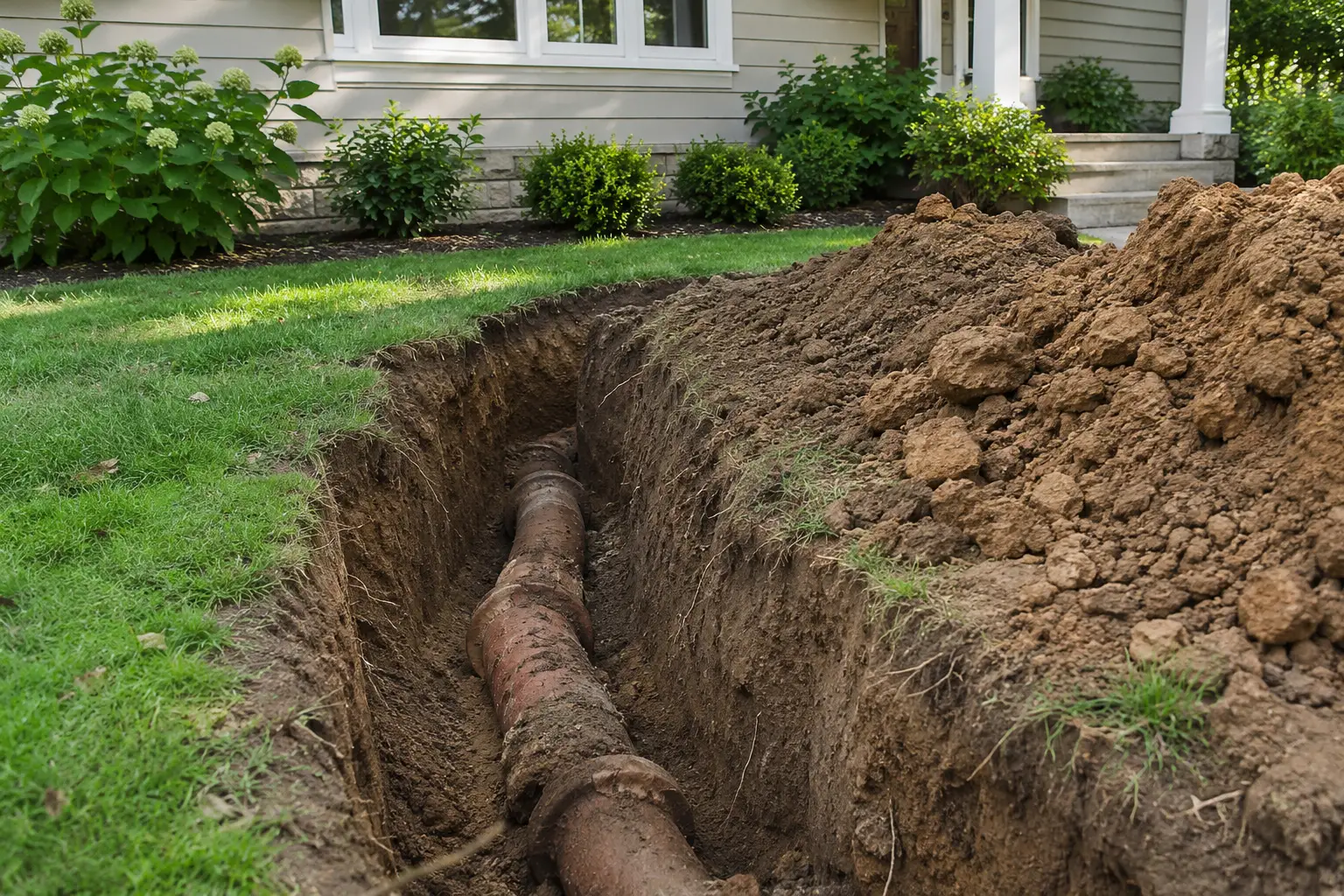
When every drain in the house slows down together, or dirty water rises out of the basement floor drain, the trouble is almost always in the main line and not in one fixture. Stop using water, keep people away from the mess and call us for sewer line repair in Cheyenne. A local technician can come out, open the line, find where it failed and walk you through the ways to fix it.
What to do when the main line backs up
A blocked sewer line has nowhere to send the water you put down it. Each flush or shower pushes more of it back up through the lowest drain in the house, which is usually a basement floor drain, a shower or a toilet.
Stop all water use
Ask everyone in the house to hold off on flushing, showers, the dishwasher and laundry. Even a short shower can put several gallons on the basement floor.
Check more than one drain
One slow sink is usually a branch clog that drain cleaning can handle. Gurgling toilets when the washer empties, or water rising in a floor drain, point to the main line.
Stay clear of the water
Sewage carries germs. Keep children and pets out of the area, wear gloves and rubber boots, and switch off power to wet outlets only from a dry spot.
Call Plumber Cheyenne
Tell us which drains are backing up, whether you know of a cleanout in the yard or basement, and roughly how old the house is. A local technician can come out to clear the line and look for the cause.
Leave the chemical drain opener on the shelf
Liquid openers do nothing to roots or a broken pipe. They sit in the standing water where the technician has to work and can burn skin. If some already went down the drain, mention it when you call.
What sewer line repair covers
The sewer line is the single pipe that carries everything from the house to the main under the street. Sewer line repair starts with getting water moving again, then finding out why it stopped so the same clog does not come back next month.
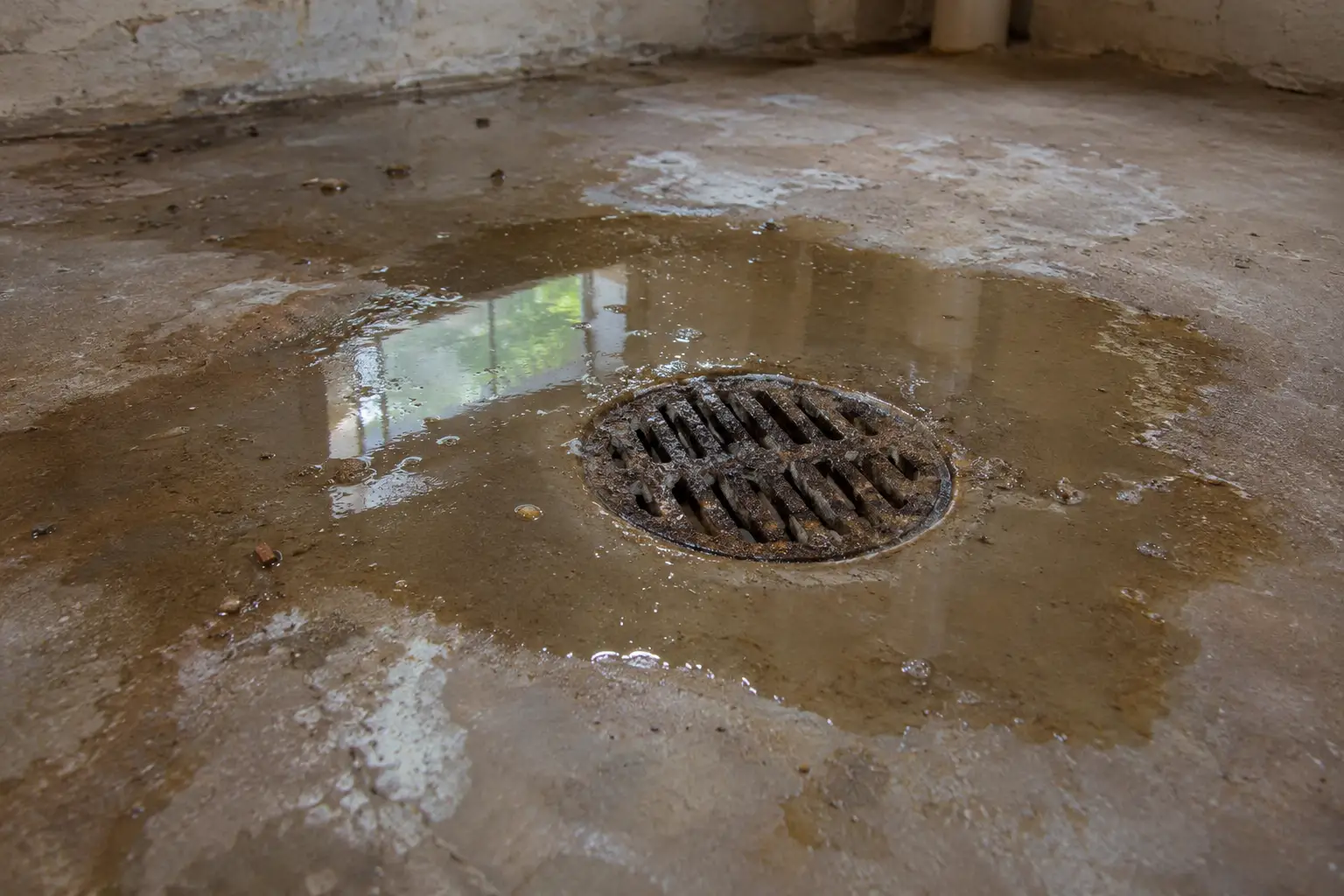
The floor drain is the lowest opening in most Cheyenne basements, so it is where a blocked main shows up first. Gray or brown water around the grate, toilet paper in the water or a sewer smell all mean the backup is coming from the main and not from rain.
Once the line is open, the water drains back down on its own. What it leaves behind still needs cleaning and drying. Our guide to a sewer backup in the basement covers safe cleanup, what to throw out and how to dry the room.
Signs your sewer line is failing
Act right away
- Sewage coming up a floor drain or tub. Stop every fixture and call us.
- A toilet overflows when the washer drains. The block is past both fixtures, in the main.
Get it seen today
- Several drains slow at the same time. A partial block in the main tends to close up further.
- Gurgling toilets and a sewer smell indoors. Air is being forced back through the traps.
Can wait a few days
- A soggy or extra green strip of lawn. A cracked line may be leaking into the soil. Book a camera look.
- Backups that return every few months. Roots or a sag are the usual reason. Plan an inspection.
A clog that clears with a plunger and stays clear is rarely a sewer line problem. A clog that keeps coming back in the lowest drains, no matter what goes down them, almost always is.
Why sewer lines break down
Older homes in town sit on several kinds of sewer pipe, and each one fails in its own way. Knowing which you have tells the technician a lot before the camera even goes in.
| Pipe | How it usually fails | What the repair often looks like |
|---|---|---|
| Clay tile | Short sections with a joint every few feet. Roots slip into the joints, and sections crack or shift as the soil moves. | Replace the broken sections, or the whole run when roots are in many joints. |
| Cast iron | Rusts and scales from the inside, then cracks along the bottom where the water runs. | Replace the failed length and check how much sound wall is left elsewhere. |
| Orangeburg | Tar paper and pitch pipe that softens, squashes into an oval and finally caves in. | Usually full replacement, because the whole run has aged the same way. |
| PVC or ABS plastic | Holds up well, but can crack or pull apart where it was poorly bedded. | A coupling repair at the broken spot. |
Tree roots
Roots follow the moisture and warm air that seep from a joint. A hair thin root gets in, feeds on what flows past and grows into a mat that catches paper and grease. Cutting it out opens the line, but the roots grow back through the same gap, often within a season.
Bellies and offsets
A belly is a stretch of pipe that has sunk lower than the pipe on either side, so water and solids sit in it instead of draining. An offset is a joint where one section has dropped or shifted. Hard Cheyenne freezes and thaws move the soil over the years, and both problems grow slowly until backups start.
What goes down the drain
Wipes sold as flushable, paper towels and cooking grease catch on every rough joint. Holiday meals send a lot of grease down kitchen sinks, which is one reason main line backups pick up late in the year.
Spot repair, full replacement or trenchless
Once the camera shows what is wrong and where, the choice of repair mostly comes down to how much of the line is damaged and what shape it is in.
- Spot repair. One cracked or root filled section is dug out and replaced with PVC. It makes sense when the rest of the line looks sound on camera.
- Full replacement by trench. The old line is dug up from the house to the main and new pipe is laid on firm bedding at a steady slope. This is the dependable fix for a long belly.
- Pipe bursting. A cone shaped head is pulled through the old pipe, cracking it outward while a new plastic pipe follows behind. It needs a pit at each end instead of a trench along the whole yard.
- Pipe lining. A tube soaked in resin is pushed into the old pipe and cured until it hardens into a new pipe inside the old one. It suits cracked pipe that still holds its round shape.
Trenchless is not right for every line
A liner follows the old pipe, so it keeps any sag or belly. A collapsed or badly offset section may need digging no matter what method is used. Ask the technician to point out on the footage why one approach fits your line better than another.
Emergency now or a planned repair?
Call right away
- Sewage is coming into the house through any drain
- No toilet in the house will flush
- Backup water is near the furnace, water heater or outlets
- A strong sewer smell inside that does not fade
Can usually be booked
- One slow drain while the rest of the house drains well
- A backup that cleared and has not returned
- A wet strip of lawn with no trouble inside
- Wanting a camera look before buying an older home
If you are unsure, stop using water and call. A blocked main does not clear itself, and a few hours of holding off on the toilets is far better than cleaning a flooded basement.
How the visit usually goes
- Open the line. The technician goes in through a cleanout or a toilet flange and clears the block with a cable machine or hydro jetting, so the house can drain again.
- Look inside. A camera runs the length of the pipe, and a locator above ground marks how deep and where any damage sits.
- Explain the options. You see the footage, hear what failed and what each kind of repair involves. Nothing is dug or replaced until you decide.
- Make the repair. The damaged pipe is replaced or lined, with the new section set at a steady slope so solids keep moving.
- Test it. Water is run through the line from inside the house and the camera goes back in to check the new work before the trench is filled.
The soil goes back in the trench, but grass and plantings over it usually take a season to settle. Ask what to expect for the yard before the work starts.
Questions worth asking about the sewer line
- What kind of pipe is my sewer line, and how old does it look on camera?
- Where exactly is the damage, and how deep is it?
- Is the rest of the line in good enough shape for a spot repair?
- Would a trenchless method work here, and why or why not?
- Do I have a cleanout, and should one be added?
- Would a backwater valve help keep sewage out of my basement?
To be ready when you call, the emergency checklist lists what to note down and what to keep the household from doing while you wait.
Keeping the main line flowing
- Flush only toilet paper. Wipes, paper towels and hygiene products snag on roots and rough joints.
- Let cooking grease harden in a can and put it in the trash instead of the sink.
- Find your cleanout and keep it uncovered, so the line can be opened without pulling a toilet.
- Plant new trees well away from where the sewer line runs to the street.
- If the line has a history of roots, a camera check every year or two catches regrowth before it plugs the pipe.
After a repair, keep a note of what was done and where. If the house is ever sold, or another backup happens, that record saves time.
Questions people in Cheyenne ask
How do I know if the main sewer line is clogged or just one drain?
If only one sink or tub is slow, the clog is usually in that branch. If several drains slow at once, toilets gurgle when other fixtures drain, or water comes up the lowest drain in the house, the main sewer line is the likely problem.
Can tree roots be removed without digging up the yard?
Yes, for now. A cable machine with a cutting head or a water jet clears roots out of the pipe through a cleanout. The roots usually grow back through the same joint, so a lasting fix means repairing or lining that section.
What is a belly in a sewer line?
A belly is a section of pipe that has sunk lower than the pipe around it. Water and waste collect in the low spot instead of flowing out, which causes repeat clogs. It is fixed by digging up that section and relaying it at the right slope.
Is trenchless sewer repair better than digging?
It disturbs less of the yard, but it only suits some lines. Lining needs pipe that still holds its shape, and neither lining nor bursting fixes a belly. The camera footage shows which methods fit your line.
Is it safe to clean up after a sewer backup myself?
Small amounts can be cleaned with gloves, boots, eye protection and a disinfectant, with children and pets kept away. Soaked carpet, drywall and anything porous usually has to go. Do not run water or flush until the line is cleared.
Should I add a backwater valve after a backup?
It can help if sewage has come back into your basement before. The valve closes when flow reverses and keeps waste from rising out of the floor drain. Ask the technician whether your line and basement layout suit one.
Sewer line repair across Cheyenne
We take sewer calls from every part of Cheyenne, from older homes with clay and cast iron lines to newer houses on plastic pipe. Tell us your street and what the drains are doing when you call.
ZIP codes 82001, 82007, 82009