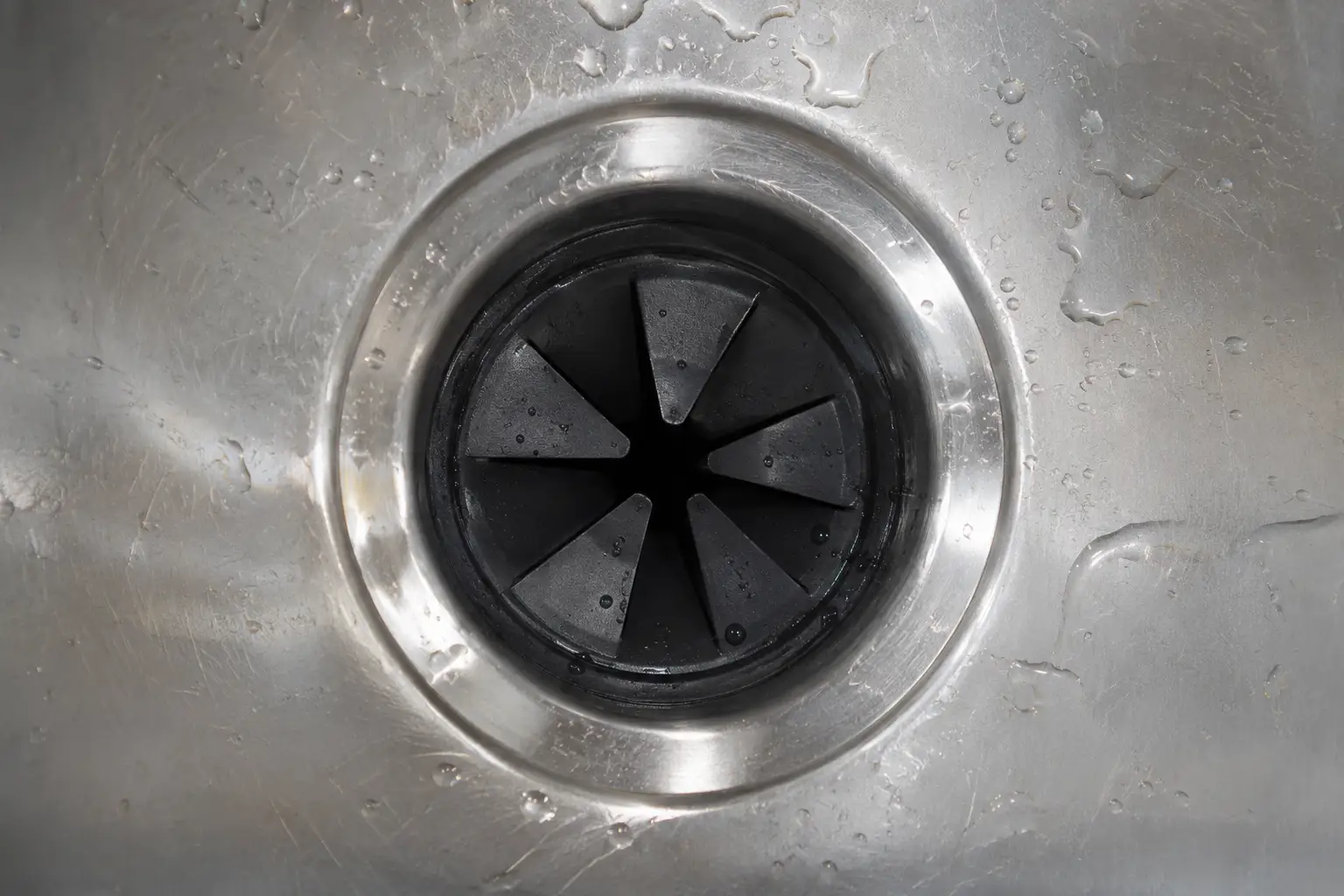
A disposal that hums without spinning, stops dead or drips into the cabinet usually has a simple cause, and a few of them you can check safely yourself. If the checks below do not bring it back, call us for garbage disposal repair in Cheyenne and a local technician can come out to look at the unit, the drain and the connections under the sink.
Two safe checks before you call
Most disposals that quit are either jammed or tripped. Both can be checked in a couple of minutes with the power off. If neither works, stop there and call.
Cut the power to the unit
Flip the wall switch off. If the disposal plugs into an outlet under the sink, unplug it. Do this before your hand goes anywhere near the cabinet.
Turn the flywheel from below
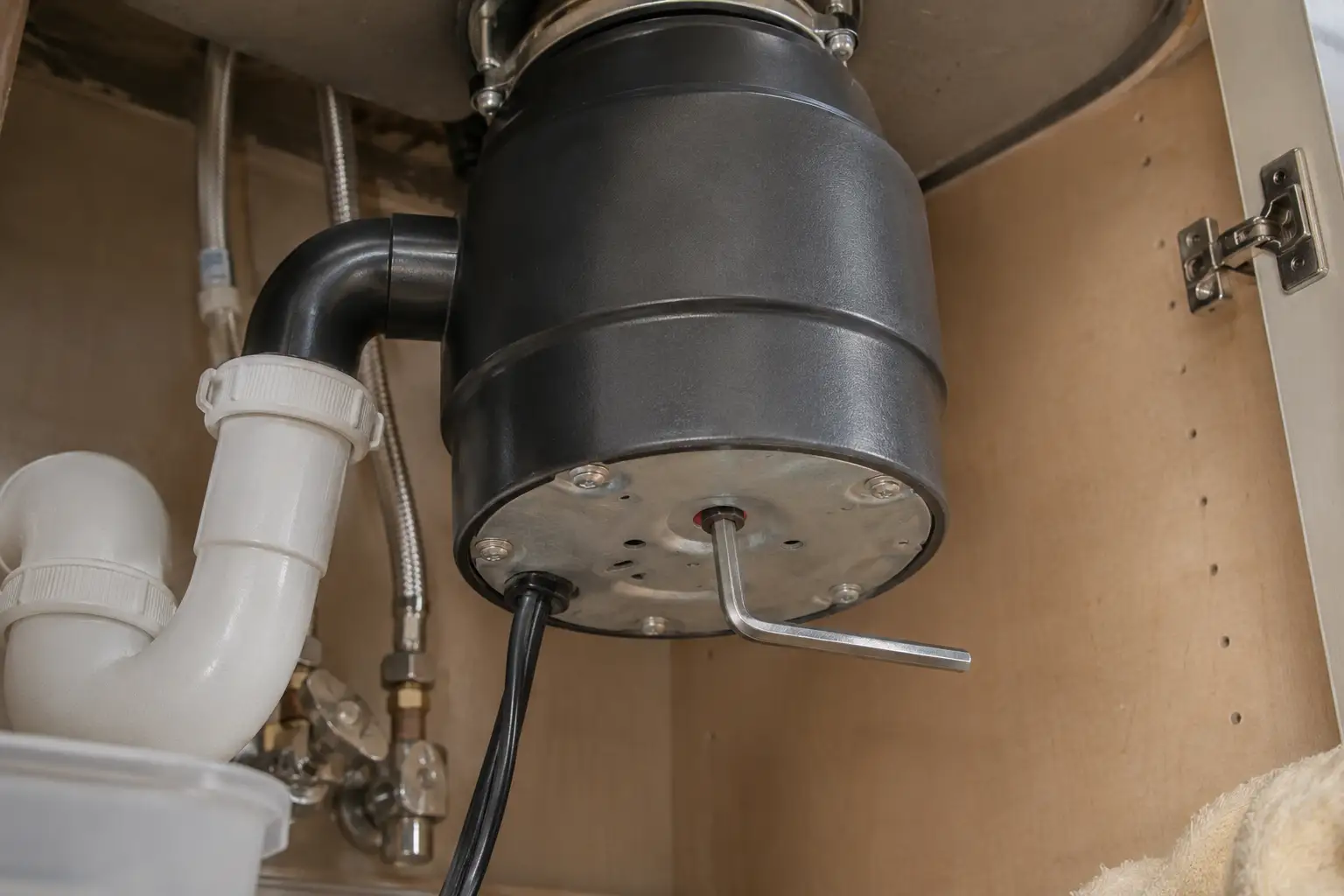
Look for a small hex socket in the center of the bottom of the unit. Fit a quarter inch hex key, the kind that often comes taped to the disposal, and work it back and forth until it turns a full circle.
Press the reset button
A small red or black button on the bottom pops out when the motor overheats. Wait ten minutes for it to cool, then press it in firmly until it clicks.
Run cold water and test
Turn on cold water, restore power and flip the switch. If it still hums, trips again or does nothing at all, call Plumber Cheyenne and describe the sound.
Never put a hand inside the chamber
Even with the switch off, the grinding plate and lugs can cut. Use kitchen tongs or pliers to lift out a spoon or bottle cap you can see, and leave anything stuck deeper for the technician.
What garbage disposal repair in Cheyenne covers
A disposal is a small motor bolted to the sink with a drain on one side and often a dishwasher hose on the other. Trouble can start in any of those parts, so the technician checks all of them rather than just the motor.
The hex socket on the bottom turns the flywheel directly, which is why it clears most jams without anyone reaching into the drain. If the key will not move at all, something hard is wedged between the plate and the grinding ring, or the bearings have seized.
A unit that keeps tripping the reset after you clear it is telling you the motor is working too hard. That can mean a partial jam, a clogged drain behind it, or a motor near the end of its life. Pressing the button over and over will not fix any of those, and it can burn out the motor for good.
Sounds and signs, and what they usually mean
Act right away
- Water spreading across the cabinet floor. Turn off the sink and the dishwasher, then call.
- A burning smell or smoke from the unit. Switch it off at the breaker and leave it off.
Get it seen today
- A steady hum with no grinding. The flywheel is jammed or the motor has stalled.
- Dirty water rising in the other sink bowl. The drain past the disposal is blocked.
Can wait a few days
- Grinding is louder or rougher than before. Worn parts or something metal rattling inside.
- A sour smell that rinsing does not clear. Food is building up under the splash guard.
Silence when you flip the switch is a different problem from a hum. Silence points to power, the reset button or the switch itself, while a hum means power is reaching a motor that cannot turn.
Common reasons a disposal quits
| Cause | What you notice | What usually fixes it |
|---|---|---|
| Hard object in the chamber | Loud clatter, then a hum or a stop | Clear the object and loosen the flywheel. |
| Fibrous or starchy food | Slow drain, unit bogs down | Clear the jam and clean the trap and drain line. |
| Grease buildup | Sink drains slowly days after a big meal | Clean the drain past the disposal. |
| Worn sink flange seal | Drips at the top where the unit meets the sink | Remove the unit and reseal the flange. |
| Loose drain or dishwasher joint | Drips at the side of the unit | Tighten or replace the gasket and clamp. |
| Cracked housing | Water from the body or the bottom | Replace the unit, since the body cannot be patched. |
Holiday weeks are a common time for disposals to give out in Cheyenne. Potato peels, turkey fat and rice go down in larger amounts than usual, and the drain behind the unit takes the hit.
Urgent or fine to wait
Call about it now
- Water is leaking faster than a towel can soak up
- There is smoke, sparks or a burning smell
- Both sink bowls are full and the dishwasher is backing up
- A wire or the electrical connection under the unit is wet
Can usually wait for a visit
- A hum you can stop by turning the switch off
- A slow drip you can catch in a bowl
- A rough grinding sound that still clears food
- A smell that comes and goes
If the sink is full and you need the kitchen, leave the disposal off and do not pour in a chemical drain cleaner. It sits in the bowl and the trap, and it makes the repair harder and riskier. If you already used one, tell the technician before any pipe is opened.
Repair the unit or replace it
Jams, a tripped reset, a loose drain joint and a worn flange seal are usually repairs. A cracked or rusted housing, a motor that keeps overheating after the drain is clear, or bearings that grind no matter what are signs the unit has run its course.
- Size. Units come in third, half and three quarter horsepower. A bigger motor handles tougher scraps but sits lower in the cabinet.
- Feed style. Continuous feed units run while the switch is on. Batch feed units only run with the stopper locked in place.
- Dishwasher hookup. A new unit has a knockout plug in the dishwasher inlet that must be removed, or the dishwasher will back up.
- Power. Some units plug in and some are wired straight to a box. The technician tells you which one you have before work starts.
How the visit goes
- Look and listen. The technician runs the unit if it is safe, checks for power, and looks at the flange, drain and dishwasher connections.
- Find the cause. That can mean freeing the flywheel, opening the trap or snaking the line past the unit.
- Explain the options. You hear what failed and whether a repair or a new unit makes more sense. Nothing starts until you say go ahead.
- Fix and test. After the repair, cold water runs through the unit and the dishwasher drains through it while every joint is checked for drips.
Things to ask the technician
- Was the problem in the disposal itself, or in the drain past it?
- Is the sink flange seal still good, or is it starting to weep?
- Is this unit sized right for how we cook?
- Is the dishwasher hose looped high enough to keep dirty water out of it?
- Is there anything we keep putting down the drain that we should stop?
Write down what the unit did and when it started before you call. The emergency checklist has a short list of what to note while you wait.
What not to put down a disposal
Most disposals that fail early fail because of what goes into them. A few habits keep the unit and the pipes behind it clear.
- Grease, oil and fat. Let them cool, wipe them out with a paper towel and put them in the trash.
- Stringy scraps like celery, onion skins, corn husks and artichoke leaves. They wrap around the plate.
- Potato peels, rice and pasta. They turn into a thick paste that settles in the trap.
- Coffee grounds and eggshells in quantity. They pack into the drain line like sand.
- Bones, fruit pits, shells and anything that is not food.
Run cold water before, during and for several seconds after grinding so the waste carries all the way down the drain. Feed scraps in slowly instead of all at once. Grind a handful of ice now and then to knock buildup off the plate, and wash the splash guard by hand. If the kitchen sink keeps backing up even with good habits, the trouble is likely further down the line, and drain cleaning or hydro jetting may be the real fix. See when a clogged drain becomes an emergency for the warning signs.
Questions people in Cheyenne ask
Why does my garbage disposal hum but not spin?
A hum means power reaches the motor but the flywheel cannot turn. Usually something is wedged inside. Turn the power off, use a hex key in the socket on the bottom to loosen it, press the reset button and test with cold water.
Where is the reset button on a garbage disposal?
On most units it is a small red or black button on the bottom of the unit, near the hex socket. It pops out when the motor overheats. Let the unit cool for about ten minutes before pressing it back in.
Why is my disposal leaking from the bottom?
Water from the very bottom of the unit usually means the internal seal has failed or the housing has cracked. Neither can be patched, so the unit normally needs replacing. Leaks at the top or side are more often fixable seals and gaskets.
Can I use a chemical drain cleaner in a garbage disposal?
It is best not to. Harsh drain chemicals can damage the seals and sit in the trap where they burn skin when the pipe is opened. If you already poured some in, tell the technician before any work starts.
Is it safe to reach into a garbage disposal?
No. Even with the switch off, someone can flip it on by mistake and the grinding parts are sharp. Cut the power, then use tongs or pliers for anything you can see, and leave deeper jams for the technician.
How do I know if my disposal needs replacing?
A cracked or rusted body, water leaking from the bottom, a motor that trips the reset with a clear drain, or grinding that stays rough after a jam is cleared all suggest the unit is worn out. The technician can tell you which applies.
Disposal repair for Cheyenne kitchens
We take calls about disposals in every part of Cheyenne, from older kitchens with original units to new builds. Tell us the street and what the unit is doing so the technician arrives ready.
ZIP codes 82001, 82007, 82009