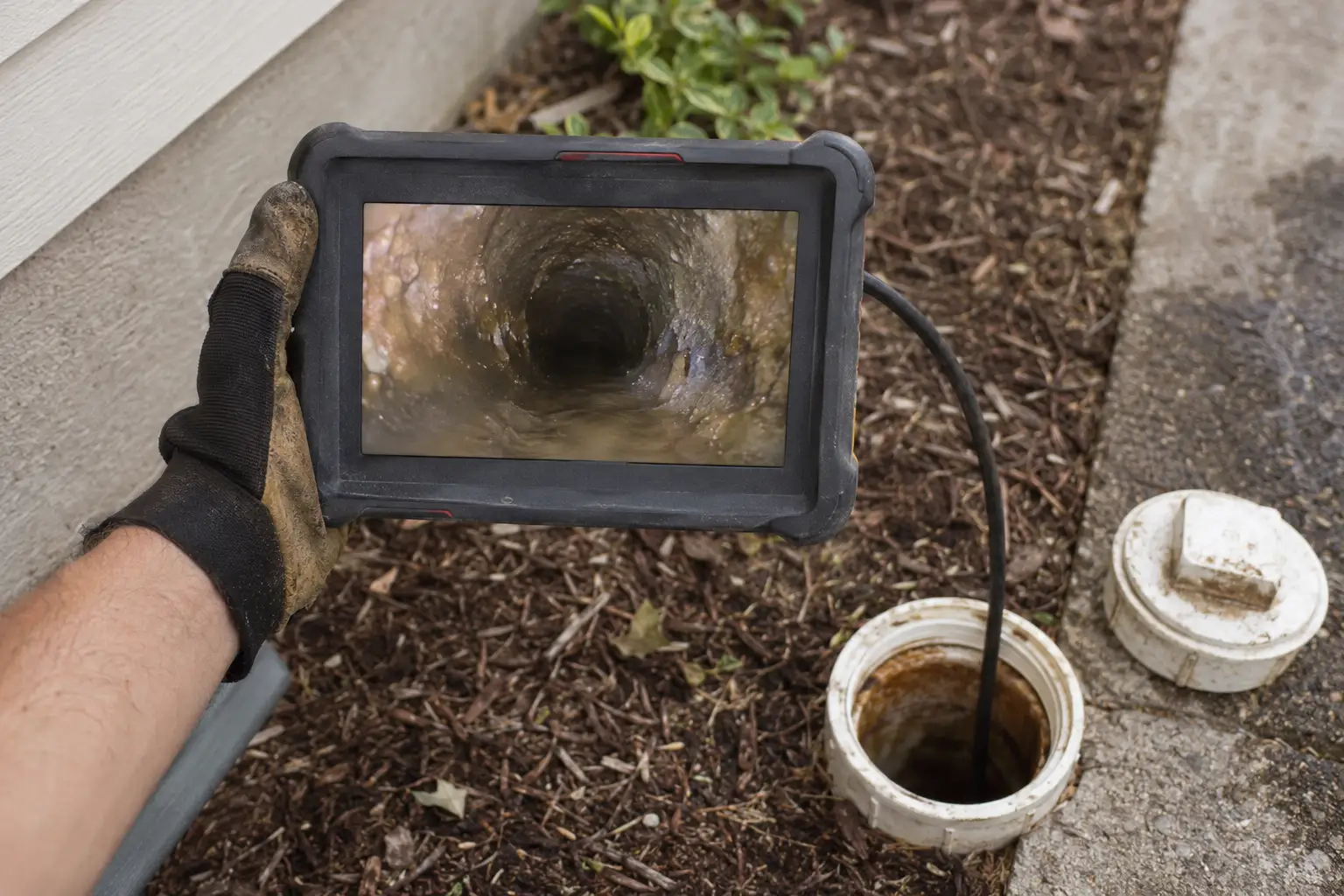
Guessing about a sewer line is how people end up clearing the same clog four times in a year. A sewer camera inspection in Cheyenne puts a small waterproof camera inside the pipe so you can see what is actually there, whether it is roots, a crack, a sag or a sound line that just needed cleaning. Call us and a local technician can come out to run the camera and show you the picture.
Getting ready for the camera
A few minutes of prep makes the visit go smoother and helps the technician know where to start.
Note what has been happening
Write down which drains backed up, how often, and whether it follows laundry day, heavy rain or a holiday meal. Patterns point to the trouble spot.
Look for the cleanout
It is often a capped pipe a few inches across, in the basement near the front wall or in the yard between the house and the street. Clear boxes or snow away from it if you find it.
Hold off on chemicals
Drain openers in the line make the work harder and can splash. If any went down already, tell us when you call.
Call Plumber Cheyenne
Tell us why you want the line looked at, whether it is backed up right now, and how old the house is. A local technician can come out with the camera.
A backed up line gets cleared first
The camera cannot see through a pipe full of standing sewage. If the line is blocked, the technician opens it before the camera goes in, which also gives the clearest view of what caused the block.
What a sewer camera inspection covers
A sewer camera inspection follows the main line from the house toward the street and records everything along the way. It is a look, not a repair, and it is the step that tells you whether a repair is needed at all.
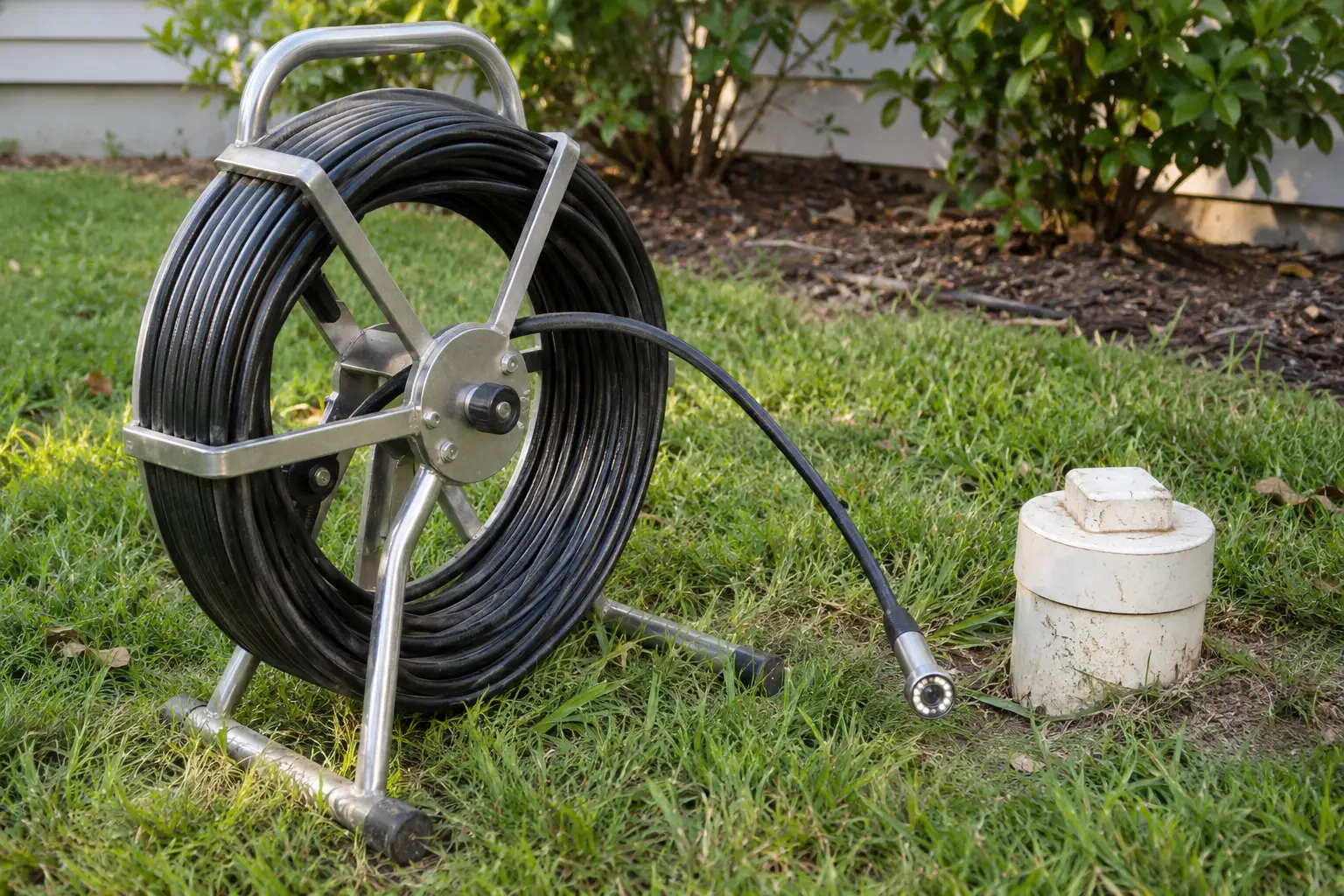
The camera rides on the end of a stiff cable that feeds off a reel. The technician pushes it into the cleanout and watches a live picture on the monitor while a counter shows how far down the line it has gone.
When something shows up, the distance and the locator reading tell you where it is in the yard and how deep. That turns a vague bad spot somewhere into a mark on the grass, which matters a lot if digging is ever needed.
A house without a cleanout can still be inspected, often by pulling a toilet. The technician can tell you if adding a cleanout would make future work easier.
When a camera look makes sense
Act right away
- Sewage just backed up into the house. Clear the line first, then run the camera to find why.
Get it seen today
- The same drain clogs again within weeks. Something in the main is catching waste.
- Several drains gurgle or slow together. The trouble is past the branch lines.
Can wait a few days
- You are buying an older home. Book it before closing so there are no surprises.
- Big trees grow near the sewer line. Roots in the joints show up long before a backup.
- A bathroom or basement remodel is planned. Know the line can carry the extra load first.
Before you buy an older home
A general home inspection rarely looks inside the sewer line, and a line replacement is one of the bigger surprises a new owner can face. Older homes in Cheyenne often still have clay or cast iron pipe out to the street. A camera run before closing shows you the state of the line while you can still ask questions and plan.
After a backup
Clearing a backup gets the house working, but it does not explain it. The camera afterward shows whether the clog was a one time mass of wipes or grease, or a root mat, a sag or a broken joint that will catch the next one too.
What the footage shows
Most findings fall into a short list. Here is what each one looks like on screen and what usually happens next.
| On the screen | What it means | What usually comes next |
|---|---|---|
| Hairy roots at a joint | Roots have found a gap between pipe sections. | Cut them out, then plan a repair or lining for that joint. |
| A step or ledge at a joint | An offset, where one section has dropped or shifted. | Watch it if water still passes cleanly, repair it if waste catches. |
| Water that pools and hides the pipe | A belly, where the pipe has sunk below its slope. | Dig and relay that stretch if clogs keep forming there. |
| A crack or missing piece of pipe wall | The pipe is broken and soil may be getting in. | Spot repair or replacement, depending on how much is broken. |
| Rough, flaking walls in iron pipe | Cast iron that has rusted and scaled from the inside. | Descaling to buy time, or replacement if the wall is thin. |
| A round pipe that looks oval | Orangeburg pipe that is flattening as it ages. | Usually full replacement before it collapses. |
| A thick coating on the walls | Grease buildup narrowing the pipe. | Cleaning with hydro jetting and kitchen habits that keep it off. |
A clean line is a finding too. Smooth walls, tight joints and water running straight through mean the earlier clog was most likely something that went down the drain, and regular drain cleaning habits are enough.
Inspection now or later?
Call now
- Sewage is in the house or the lowest drain is filling
- No toilet will flush and the house has no working drain
- Backup water is near outlets, the furnace or the water heater
Fine to schedule
- A home purchase with a closing date ahead
- Clogs that clear and come back over months
- A routine check on an older line with trees nearby
- Planning before a remodel or an added bathroom
An active backup is a cleaning job first and an inspection second. If water is coming up a drain, stop using water in the house and call.
What happens during the visit
- Find a way in. The technician opens the cleanout, or pulls a toilet if there is none, and clears the line if it is blocked.
- Run the camera. The camera travels the main while you can watch the monitor and ask about anything on screen.
- Mark the spots. Any damage is located from above and its depth noted, so a repair can be planned exactly.
- Explain what was found. You hear what each finding means and what the options are. Any repair waits until you decide.
- Close it up. The cleanout cap or toilet goes back and the line is run with water to be sure everything drains.
Ask whether you can keep a copy of the recording. It is useful when comparing options, and handy for a later camera run to see if a problem has grown.
Questions to ask about your sewer line
- What is the pipe made of, and does it change partway to the street?
- How far did the camera get, and what stopped it if it did not reach the main?
- Which findings need work now and which can be watched?
- Is anything here a reason for sewer line repair, and where would the work happen?
- Would a cleanout make future work easier on this house?
If a backup is happening while you read this, the emergency checklist covers what to do until help arrives.
Keeping the line clear after the inspection
- Only toilet paper goes in the toilet, even wipes that say flushable on the package.
- Scrape plates and pans into the trash, and let grease set in a can rather than rinsing it down.
- If roots showed up, plan a camera check every year or two so regrowth is caught early.
- Keep the cleanout cap tight and visible, especially before winter snow covers the yard.
Questions people in Cheyenne ask
What does a sewer camera inspection show?
It shows the inside of the main line from the house toward the street. Roots, cracks, offset joints, sags that hold water, grease buildup and the pipe material all show up on the monitor, along with how far down the line each one sits.
Should I get a sewer camera inspection before buying a house?
For an older home it is well worth it. A general home inspection rarely looks inside the sewer line, and a failing clay or cast iron line is a big repair to inherit. The footage gives you facts to plan with before closing.
Can a camera inspection be done if the line is backed up?
The line has to be opened first, because the camera cannot see through standing sewage. The technician clears the block, then runs the camera, which also shows exactly what caused the backup.
Does a camera inspection damage the pipe or the yard?
No. The camera goes in through an existing cleanout or a toilet opening, and nothing is dug. The only work outside is finding and marking any problem spots on the ground so a repair could be planned.
How often should a sewer line be inspected?
Most lines only need a look when there is a reason, such as repeat clogs, a backup or a home purchase. Lines with a history of roots benefit from a check every year or two so regrowth gets cut before it blocks the pipe.
Can I watch the inspection?
Yes. Most people like to see the monitor while the camera runs and ask questions as things come up. It makes the findings much easier to understand than a description afterward.
Camera inspections across Cheyenne
We take calls from homeowners and buyers all over Cheyenne, whether the house is on an older clay line or newer plastic pipe. Tell us your street and why you want the line looked at.
ZIP codes 82001, 82007, 82009