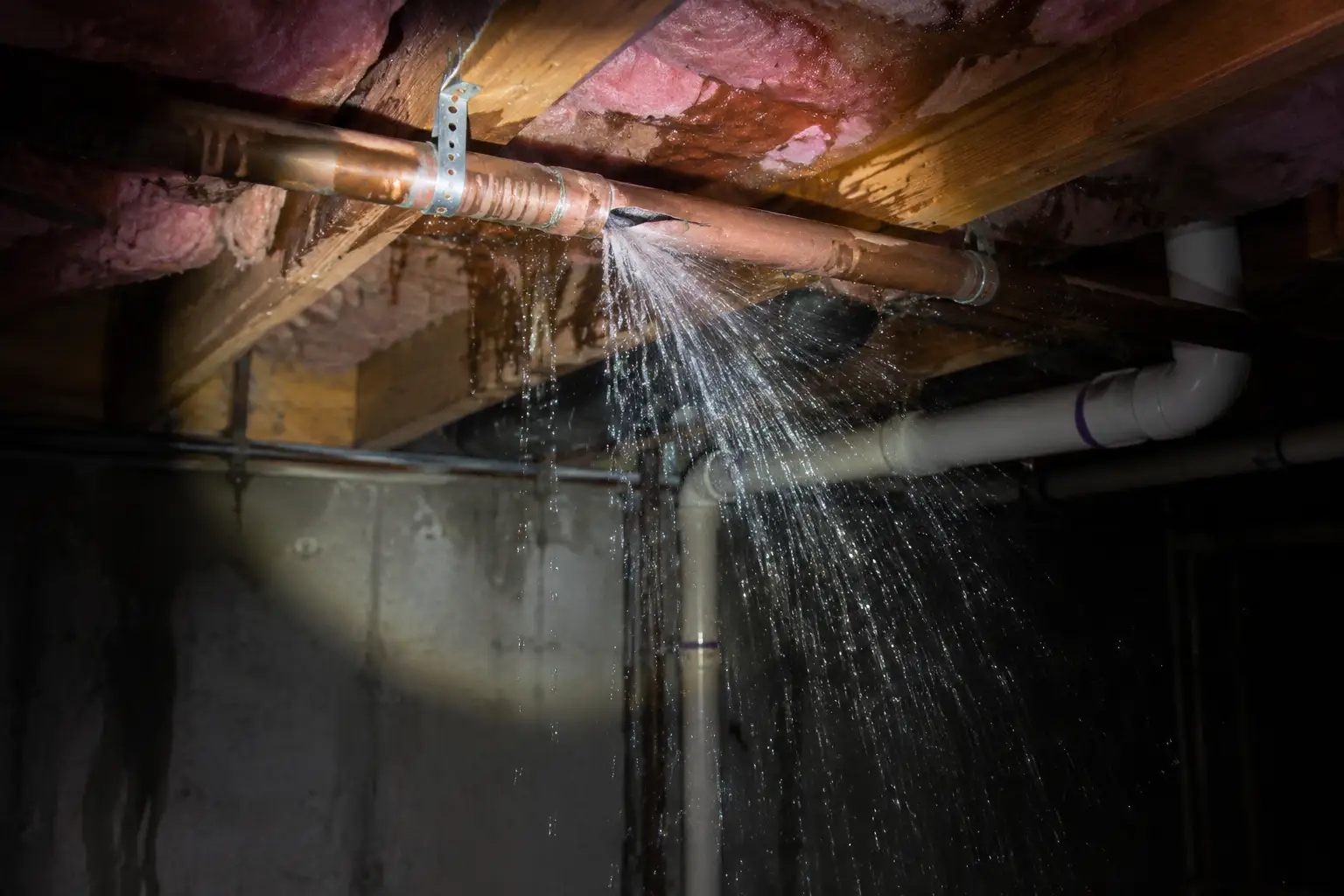
A pipe spraying water, a toilet that keeps running over or sewage coming up a floor drain does not wait for a good moment. When you need an emergency plumber in Cheyenne, WY, take the first safety step for your problem below, then call Plumber Cheyenne. Tell us what is happening and a local technician can come out to stop the damage and make the repair.
Is this a plumbing emergency?
A plumbing emergency is anything causing damage right now, putting someone at risk, or leaving the house without water or a working drain. If you are unsure, ask one question. Will this be worse in an hour if nobody touches it? If the answer is yes, treat it as urgent.
Act right away
- Water spraying, pouring or coming through a ceiling. Close the main shut off valve and call.
- A smell of gas or a rotten egg odor. Leave the house first, then call 911 from outside.
- Sewage coming up a floor drain or tub. Stop all water use and keep people away.
Get it seen today
- No water at any faucet. Ask a neighbor first, then call if only your house is dry.
- A water heater tank leaking at the base. Shut off its gas or power and its cold water valve.
Can wait a few days
- One slow drain while the rest work. Stop using it and book a drain cleaning.
First steps for the most common plumbing emergencies
Find your problem below. Each one starts with the step that limits damage, then points to the page with more detail.
Smell gas? Leave first, then call.
Get everyone out of the house now. Do not switch lights or appliances on or off, do not use a lighter, and do not start a car in an attached garage. Call 911 or the gas company emergency number from outside. A plumber repairs gas piping only after the emergency responders have made the house safe.
A burst or split pipe
Close the main shut off valve, usually where the water line enters the basement or crawl space near the meter. Switch off power to any wet area from a dry spot, then open a faucet on the lowest floor to drain the lines. The burst pipe repair page and the guide on what to do when a pipe bursts go through it step by step.
No water anywhere in the house
Ask a neighbor whether they have water. If the whole street is dry, the problem is likely outside your home. If only your house is dry on a bitter morning, a frozen supply line is the usual cause, and frozen pipe repair explains what to check. In warm weather, a broken service line or a failed valve is more likely, which falls under water line repair.
Sewage backing up
Stop running water and do not flush, because every drop you use has to go somewhere. Keep children and pets away, and wear gloves and boots if you must walk through it, since backup water is contaminated. A backup usually means a blockage in the main line, covered on the sewer line repair page and in the guide to sewer backup in the basement.
A leaking water heater
Turn the gas control knob to off, or switch off the breaker for an electric heater. Then close the cold water valve on the pipe feeding the top of the tank. If the relief valve is hissing or you notice a scorching smell, do those steps right away and stay clear of the discharge pipe. Never cap or plug a relief valve. Water heater repair covers what comes next.
An overflowing toilet
Lift the tank lid and press the flapper down to stop the flow, then turn the small valve behind the toilet clockwise. If sewage is also rising in a tub or floor drain, treat it as a sewer backup instead. See what to do when a toilet overflows and toilet repair.
Frozen lines
If a faucet gives a trickle or nothing after a hard freeze, open it and leave it open. Warm the area with a space heater kept well away from anything that can burn, or move a hair dryer slowly along the pipe. Never use an open flame or a torch. Watch for drips as the ice melts, because a frozen pipe can split and only show it once water flows again.
Steps that help in almost any plumbing emergency
Stop the water
Close the main shut off valve, or the small valve at the fixture if the trouble is in one place. The guide on shutting off your water shows where to look.
Keep power and water apart
If water reaches outlets, cords or the electrical panel, switch off the breaker for that area from a dry spot. If you would have to stand in water to reach it, leave it and say so when you call.
Move what you can
Lift rugs, boxes and electronics off a wet floor and lay towels down to slow the spread. Photos of the damage help with an insurance claim later.
Call Plumber Cheyenne
Tell us what you see, where it is and what you have already shut off. A local technician can come out and take it from there.
What an emergency plumber in Cheyenne handles
Urgent calls cover a wide range of problems. These are the ones we hear about most, and each links to its own page.
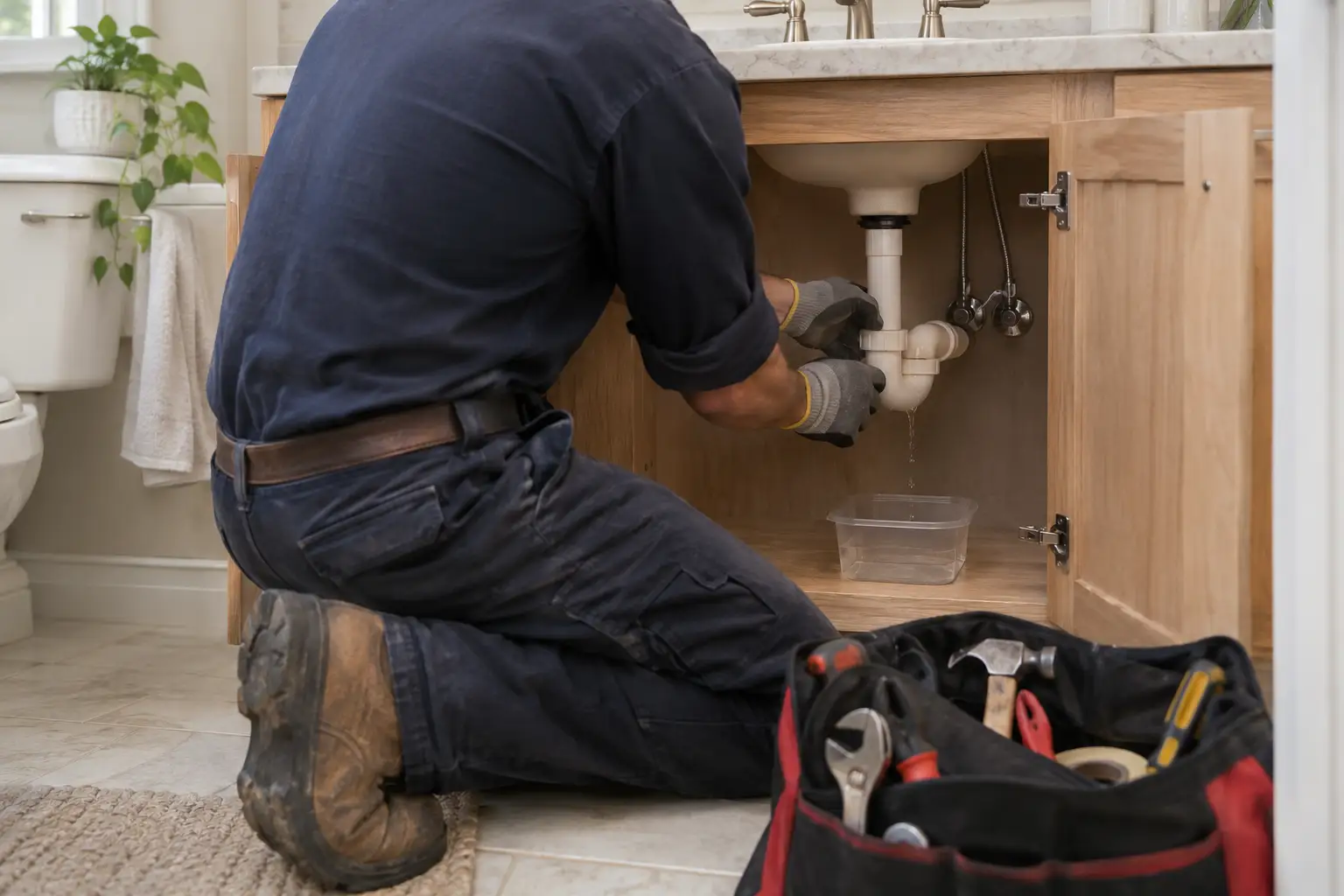
Not every urgent call ends with a big repair. Sometimes the culprit is a burst supply hose under a vanity, a cracked compression fitting or a stuck fill valve, and the technician can often take care of it during that visit.
Other times the first visit is about making the house safe. The damaged section is isolated so the rest of the house has water again, and a larger job such as repiping or a sewer line repair is planned with you afterward.
Urgent now or fine to book a visit?
Call now
- Water is spraying, pouring or running through a ceiling
- Sewage is coming up into the house
- You smell gas (leave first, then call from outside)
- A water heater tank is leaking or the relief valve keeps blowing
- Water is near outlets or the electrical panel
Usually fine to book
- A dripping faucet or a toilet that runs now and then
- One slow drain while the rest of the house drains well
- Lukewarm water from a heater that is not leaking
- A small stain that is dry and not growing
Something on the second list can still turn urgent. A slow drain that starts backing into a tub, or a drip that becomes a stream, belongs on the first list. The guide on when a clogged drain becomes an emergency draws that line for drains.
What to have ready when you call
- Where the problem is, such as the basement ceiling or under the kitchen sink
- What you already shut off, whether the main valve, a fixture valve or a breaker
- What kind of pipe you can see, if any, like copper, white or colored plastic, or gray steel
- Whether water is still running or has stopped
- Anything you tried, especially chemical drain cleaner, which the technician needs to know about before opening a drain
The plumber emergency checklist puts all of this on one page you can keep near the main valve.
How an emergency visit usually goes
- Make it safe. The technician confirms the water, gas or power is off where it needs to be and looks for anything that could make things worse.
- Find the cause. Water often shows up far from where it starts, so tracing the source comes first. That may mean a small opening in drywall or a camera inspection of a drain.
- Explain the options. You hear what failed, what the repair involves and what can wait. Nothing starts until you say go ahead.
- Repair or stabilize. Many problems are fixed on that visit. A larger job may get a temporary fix so the house has water and working drains in the meantime.
- Test before leaving. The water goes back on slowly, joints are checked and drains are run to make sure they flow.
Cleanup is a separate job.
Wet drywall, carpet and insulation need drying quickly to keep mold from setting in. The technician can point out what got soaked so you can start on it, and your insurer can tell you what the policy expects.
Making the next emergency less likely
Most plumbing emergencies give you a few minutes of warning if you know what to turn and where it is. Ten minutes of preparation now makes the next one smaller.
- Find and test the main valve. Turn it off and back on once a year so it does not seize.
- Learn the fixture valves. Toilets, sinks, the washer and the water heater each have their own.
- Get ready for winter. Cheyenne cold snaps freeze lines in garages and outside walls. Disconnect hoses in the fall and read the guide on keeping pipes from freezing.
- Watch what goes down the drains. Grease, wipes and food scraps cause many backups, especially around holiday cooking.
- Replace old washer hoses. Cracked rubber hoses are a common cause of sudden flooding in laundry rooms.
The seasonal maintenance checklist covers the rest, and Ready.gov has broader advice for preparing a household for emergencies.
Questions people in Cheyenne ask
What counts as a plumbing emergency?
Anything causing damage right now or putting people at risk. That includes a burst pipe, water through a ceiling, sewage backing up, a leaking water heater tank, no water during freezing weather and any smell of gas. If waiting will make it worse, call Plumber Cheyenne and tell us what is happening.
What should I do while I wait for the plumber?
Keep the water off at the main or at the fixture, keep power off near anything wet, and move belongings out of the way. Take photos for your insurer. Do not pour chemical drain cleaner into a backed up drain, since it makes the work hazardous for the technician.
Should I call a plumber or 911 if I smell gas?
Leave the house first, then call 911 or the gas company emergency number from outside. Do not switch anything on or off on your way out. Once the responders have made the house safe, a plumber can repair the gas piping that leaked.
Can I use the toilet or sinks during a sewer backup?
No. Every flush, shower or load of laundry adds water to a line that is already blocked, and that water comes up at the lowest drain in the house. Stop all water use, keep people and pets away from the area and call us.
Is a leaking water heater an emergency?
A leak from the tank itself usually is, because tanks rarely stop once they start. Turn off the gas or the breaker and close the cold water valve above the tank. A drip from a fitting or a valve can be less urgent, but it is still worth a call.
What if I cannot find my main shut off valve?
Check where the water line comes through the basement or crawl space wall, near the water meter, in a utility closet or beside the water heater. If you cannot find it or it will not turn, call us and say so. The technician can close the water at the curb stop.
Emergency plumbing help across Cheyenne
We take calls from homes in every part of Cheyenne, in ZIP codes 82001, 82007 and 82009. When you call, give us your street and the easiest way in, such as a side door or the garage.
ZIP codes 82001, 82007, 82009