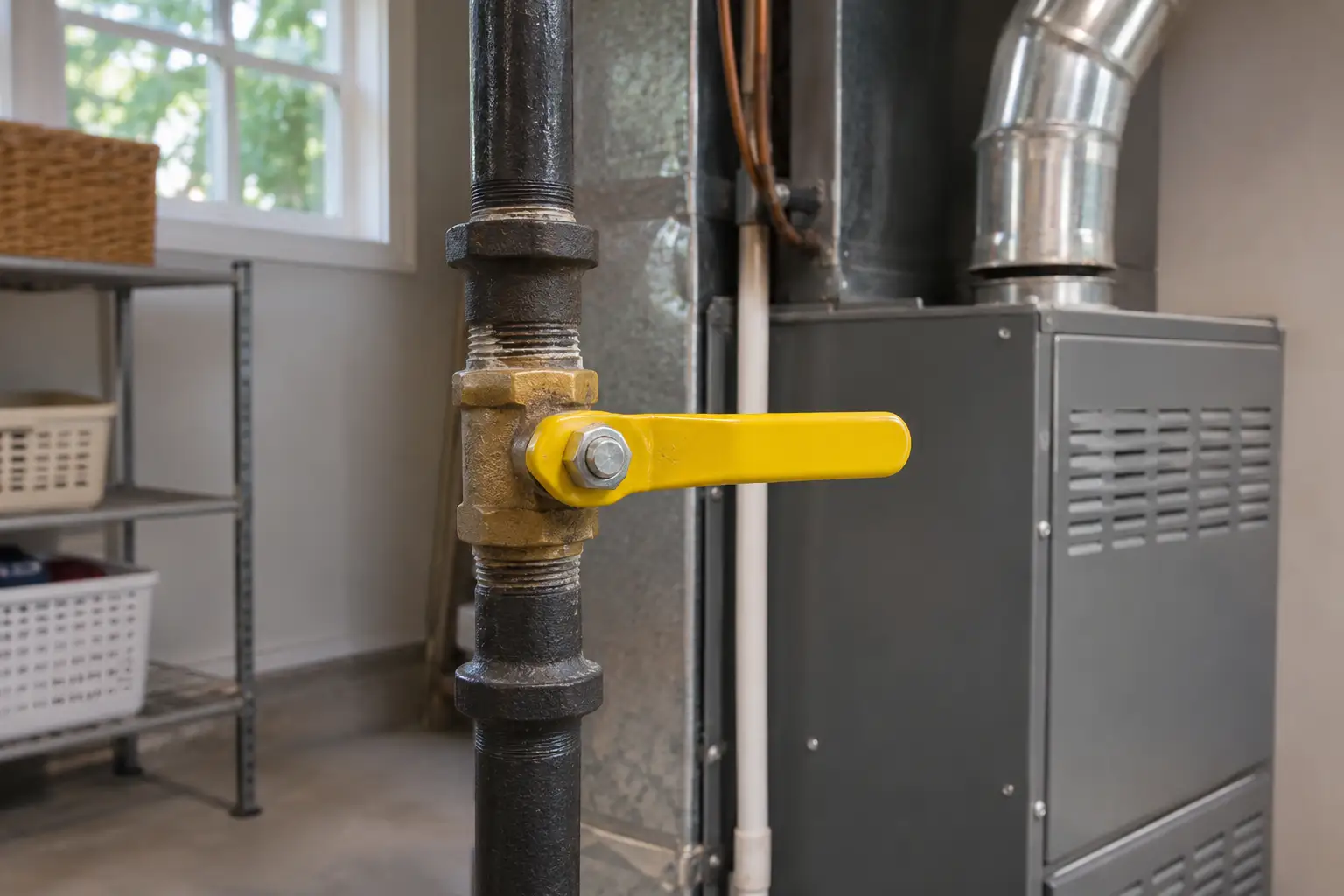
Safety comes before anything else on this page. If you smell gas right now, stop reading, get everyone out of the house and call 911 or the gas company emergency number from outside. Once the emergency is handled, call us for gas line repair in Cheyenne and a local technician can come out to fix the piping, replace worn connectors or run a new line for an appliance.
If you smell gas, leave first
Natural gas has a rotten egg smell added so you notice a leak. Treat that smell as an emergency every time, even if it seems faint.
Get everyone out now
People and pets leave the house right away. Leave the door open behind you if it is on your way out.
Do not touch anything electric
Do not flip light switches, unplug anything, use the garage door opener, ring a doorbell or use a phone inside. A tiny spark can ignite gas. Never use a lighter or match.
Call from outside
Once you are well away from the house, call 911 or the gas company emergency number. They shut off the gas and make the house safe.
Then call Plumber Cheyenne
After the gas company or fire crew says the house is safe, call us. A local technician can come out to repair the piping so the gas can go back on.
A plumber is not the first call for a gas smell
Emergency crews and the gas company handle the leak itself. The repair comes after. The same goes for a carbon monoxide alarm. Get everyone outside, call 911 and do not go back in until you are told it is safe.
What gas line repair in Cheyenne covers
Gas line repair covers the piping inside and around the house, from the meter to each appliance. The technician works on the house side of the meter. The meter and the line up to it belong to the gas company.
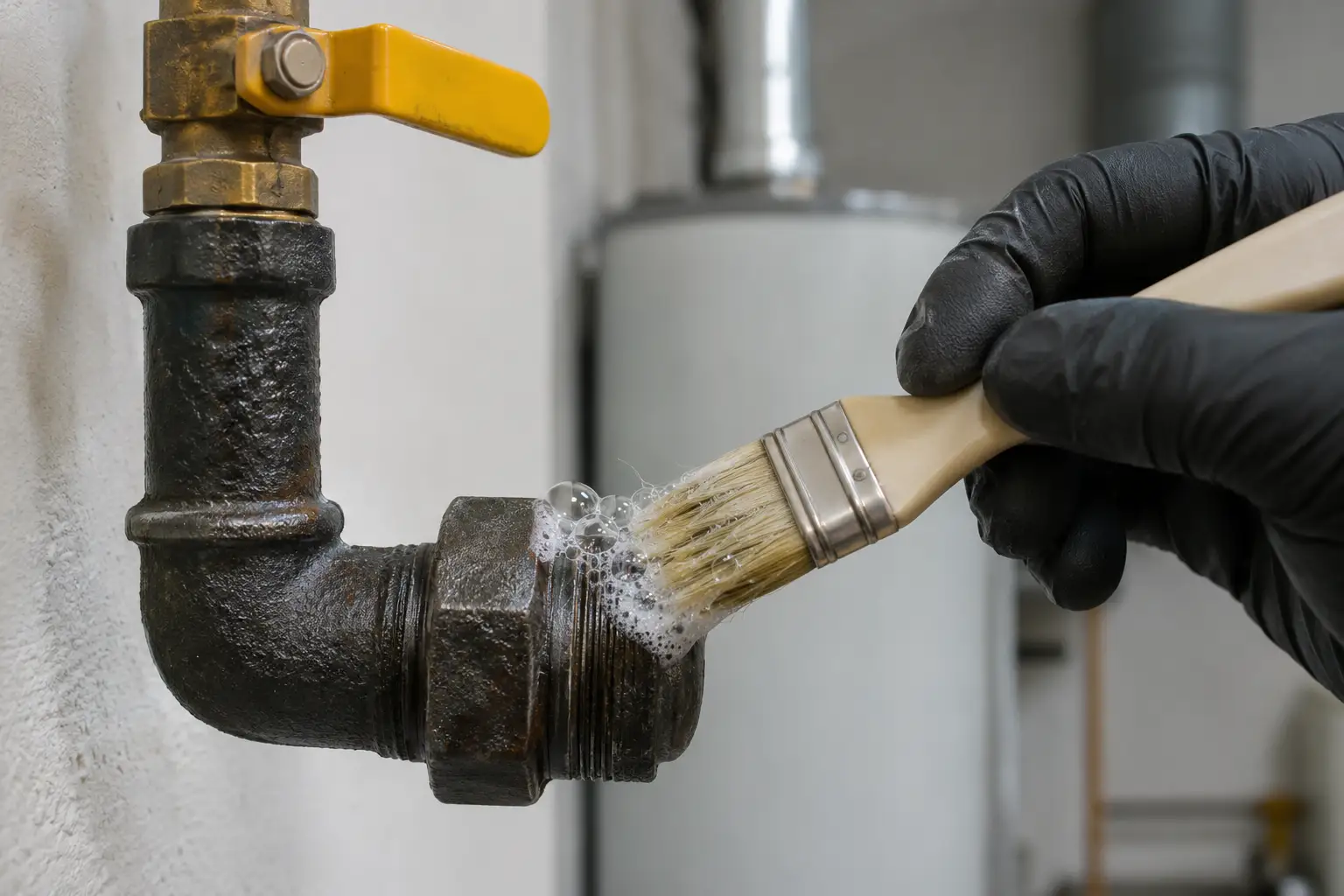
Small leaks at a threaded joint or connector often show up as bubbles when a soap solution is brushed on. The technician uses that along with a gas detector and a pressure gauge to find exactly which fitting is leaking.
Never test for a gas leak with a flame. A lighter held near a fitting is how small leaks turn into fires. If you smell gas, leave and call from outside instead of hunting for the source.
Signs of a gas line problem
Act right away
- A rotten egg smell indoors. Leave the house and call 911 or the gas company from outside.
- Hissing near a gas pipe or appliance. Leave now and call from a safe distance.
- Bubbles in a puddle or a dead strip of grass over a buried gas line. Stay clear and call the gas company.
Get it seen today
- Rust or flaking on a gas pipe. Corrosion can thin the pipe. Have it looked at.
- Burner flames that are yellow and lazy instead of blue. The appliance may need service. Make sure your CO alarm works.
Can wait a few days
- A new range or dryer that needs a gas hookup. Book a visit to run or connect the line.
If the pilot on your water heater keeps going out but there is no gas smell, the problem is usually the heater, not the line. Water heater repair covers that.
Black iron, CSST and connectors explained
Black iron pipe
Most older houses have black iron gas pipe with threaded joints. It is strong, but joints can loosen when an appliance gets pushed around, and pipe outdoors or in a damp crawl space can rust. A damaged length is cut out and replaced with new pipe and fittings, then tested.
CSST
Newer homes and remodels often use CSST, a flexible stainless tube with a yellow or black coating. It goes in faster than iron pipe, but it has to be bonded to the electrical grounding system as the maker requires, and a nail or screw through it causes a leak. The technician checks the bonding while working on it.
Appliance connectors
The short flexible tube behind a range or dryer is the part that moves the most. Old uncoated brass connectors are a known weak spot and should be replaced, not reused. A new connector, a working shut off valve and a sediment trap where the appliance needs one keep the hookup safe.
Common gas piping problems
| Problem | What you might notice | Usual fix |
|---|---|---|
| Loose threaded joint | Faint smell near one fitting, bubbles in a soap test | Remake the joint with fresh sealant and test |
| Old brass connector | Uncoated flexible line behind an older appliance | Replace with a new coated connector and valve |
| Rusted pipe | Flaking or pitting on outdoor or crawl space pipe | Replace the section and protect it from moisture |
| Punctured CSST | Smell after hanging shelves or drilling a wall | Replace the damaged run with approved fittings |
| Leaking appliance valve | Smell or hiss right at the shut off handle | Replace the valve |
| Undersized line | Appliances struggle when several run at once | Resize or add a line for the full gas load |
Adding a gas line for a new appliance
Switching from an electric range or dryer to gas, adding a fireplace insert or putting in a gas grill or garage heater all need a properly sized line. The pipe has to carry enough gas for everything that might run at the same time, not just the new appliance, so the technician adds up the load of the whole house before choosing a size and path.
Gas work often needs a permit and an inspection. The technician will tell you when it applies to your job. Once the line is in, it is pressure tested, the appliance is connected and lit, and the flame is checked.
Leave now or schedule a repair?
Leave and call 911 or the gas company
- You smell gas anywhere in the house
- You hear hissing near a gas pipe
- The carbon monoxide alarm is sounding
- A gas line outside was hit while digging
Fine to book a visit
- A rusty pipe with no smell
- An old brass connector you want replaced
- A stiff appliance shut off valve
- Planning a new gas range, dryer or grill
What happens on a gas line visit
- Make it safe. The technician closes the gas to the part of the system being worked on and checks the air with a gas detector.
- Find the problem. Fittings, connectors and valves are checked with soap solution and a pressure test to find the exact leak or weak spot.
- Explain the options. You hear what failed and what the repair involves, including whether a permit is needed. Work starts only when you say so.
- Repair the piping. Damaged pipe, connectors or valves are replaced with parts made for gas.
- Test and relight. The system holds pressure on a gauge, the gas goes back on, pilots are relit and each appliance flame is checked.
Questions to ask, and staying safe after
- What caused the leak, and are other fittings likely to have the same problem?
- Are any of my appliance connectors old brass ones that should be replaced?
- If I have CSST, is it bonded the way it should be?
- Does this repair need a permit and an inspection?
- Is the gas line big enough if I add another appliance later?
For staying safe day to day, put carbon monoxide alarms on every floor and near bedrooms, and test them monthly. Do not hang clothes or tools on gas pipes. When you pull a range or dryer out to clean, move it gently so the connector does not kink. The emergency checklist and Ready.gov both have more on preparing for a household emergency.
Questions people in Cheyenne ask
What should I do if I smell gas in my house?
Leave right away with everyone in the house. Do not switch lights or appliances on or off, do not use a phone inside and never light a flame. Once you are outside and well away, call 911 or the gas company emergency number.
Can a plumber fix a gas line?
Yes. A technician repairs and replaces gas piping, connectors and valves on the house side of the meter, and runs new lines for appliances. If you smell gas, the emergency crew or gas company comes first, and the repair happens after the house is safe.
How do I know if a gas connector needs replacing?
Look behind the range or dryer. An uncoated brass connector, one that is kinked or cracked, or any connector that has been reused on a new appliance should be replaced. The technician can check each one while working on the system.
What is CSST gas pipe?
CSST is flexible stainless steel gas tubing with a yellow or black coating, common in newer homes and remodels. It needs to be bonded to the electrical grounding system and protected from nails and screws. A damaged section is replaced with fittings made for it.
Do I need a permit for a new gas line?
Gas work often needs a permit and an inspection, especially new lines and appliance additions. The technician will tell you whether your job needs one before the work starts, so you know what to expect.
Can I connect a gas dryer or range myself?
It is safer to have a technician do it. The connector, valve and fittings need to be right for gas, the joint has to be tested for leaks and the appliance flame checked. A small mistake can leave a slow leak behind the appliance.
Gas piping help across Cheyenne
We take calls about gas lines from homes all over Cheyenne. For a gas smell, leave and call 911 first. For the repair afterward, tell us your street and what was found so the technician comes prepared.
ZIP codes 82001, 82007, 82009