A plumbing emergency in Cheyenne rarely waits for a good moment. It shows up as a burst line on a frozen January night or sewage in the floor drain the day guests arrive. This checklist walks you through the first ten minutes, what to do for each type of emergency and what to tell us when you call, so a local technician can come out knowing what they are walking into.
The first ten minutes of any plumbing emergency
Whatever went wrong, the same four moves come first. They limit the damage, keep everyone safe and give the technician a clear starting point.
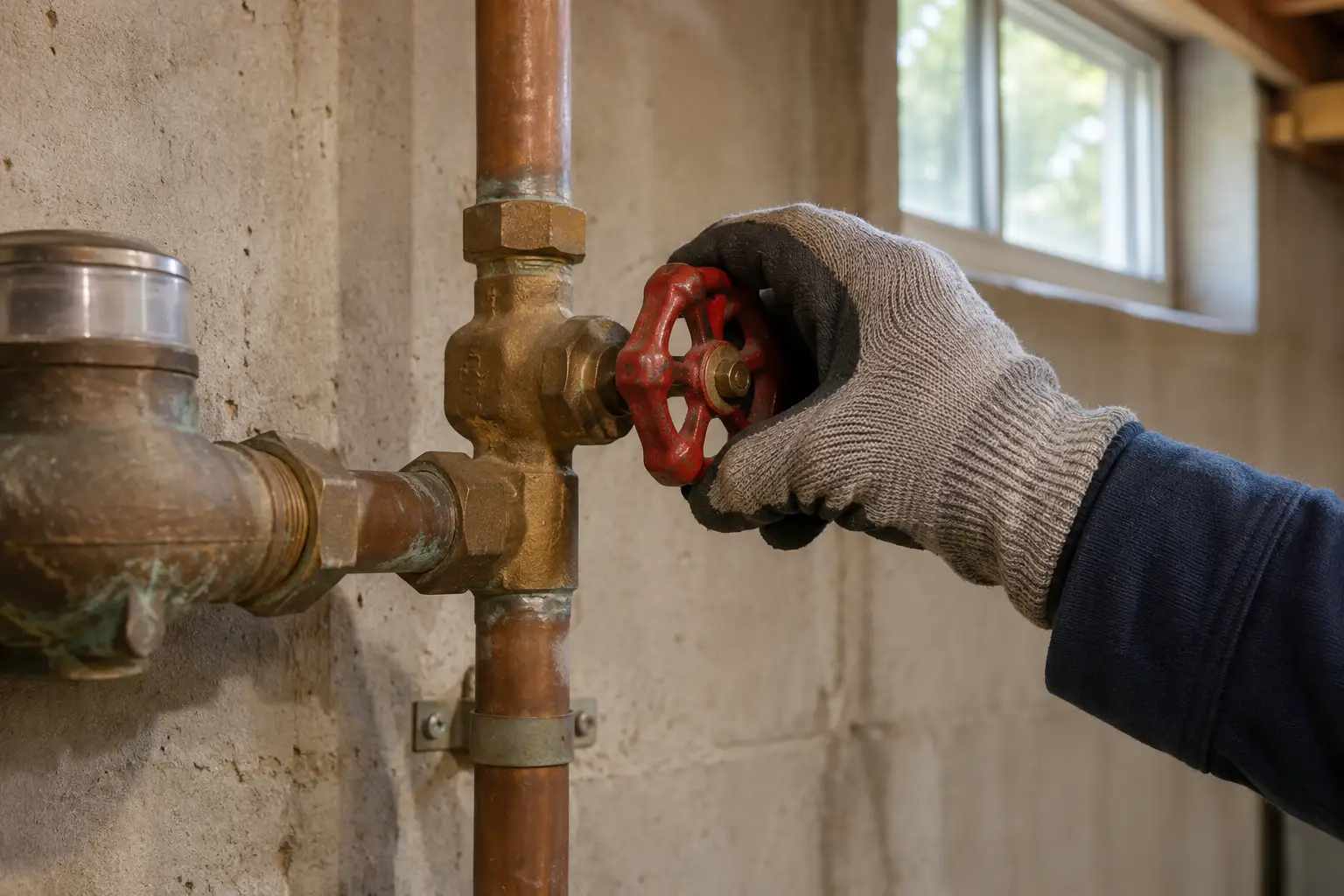
Stop the water at the main
Find the main shut off valve, usually low on a basement or crawl space wall where the line enters the house. Turn a round handle clockwise until it stops, or a lever a quarter turn. The shut off guide shows the usual spots.
Make wet areas safe
If water is near outlets, cords or the electrical panel, switch off that breaker from a dry place. If you cannot reach the panel without stepping in water, stay out and call.
Protect what you can
Move rugs, boxes and electronics off the floor. Put towels at doorways and a bucket under drips. Take a few photos for your insurer.
Call Plumber Cheyenne
Tell us what happened, where, and what you already shut off. A local technician can come out to find the cause and repair it. Our emergency plumber page explains what that visit covers.
Smell gas? Skip everything on this page
Leave the house with everyone in it. Do not switch lights on or off, do not use a lighter, and call 911 or the gas company emergency number from outside. A plumber repairs gas piping only after the emergency is handled.
When a pipe bursts or a toilet overflows
Burst or split pipe
- Close the main. A split line keeps pouring until the supply is off, and minutes count.
- Drain the lines. Open a faucet on the lowest floor so the water still in the pipes runs out where you can see it.
- Watch the ceiling. A sagging, bulging patch of drywall holds water. Keep people out from under it.
- Call us. Say what kind of pipe split if you can see it, such as copper, PEX or galvanized steel.
Pipes split most often in outside walls, garages and crawl spaces after a hard freeze. The full walk through is in what to do when a pipe bursts, and the repair itself is covered on burst pipe repair.
Toilet overflowing
Reach behind the toilet and turn the small oval handle clockwise. If it is stuck, lift the tank lid and raise the float so the tank stops filling. Do not flush again. Once the water stops rising, a plunger often clears a simple clog. If several fixtures back up together, the trouble is in the main line, not the toilet. Read what to do when a toilet overflows or see toilet repair.
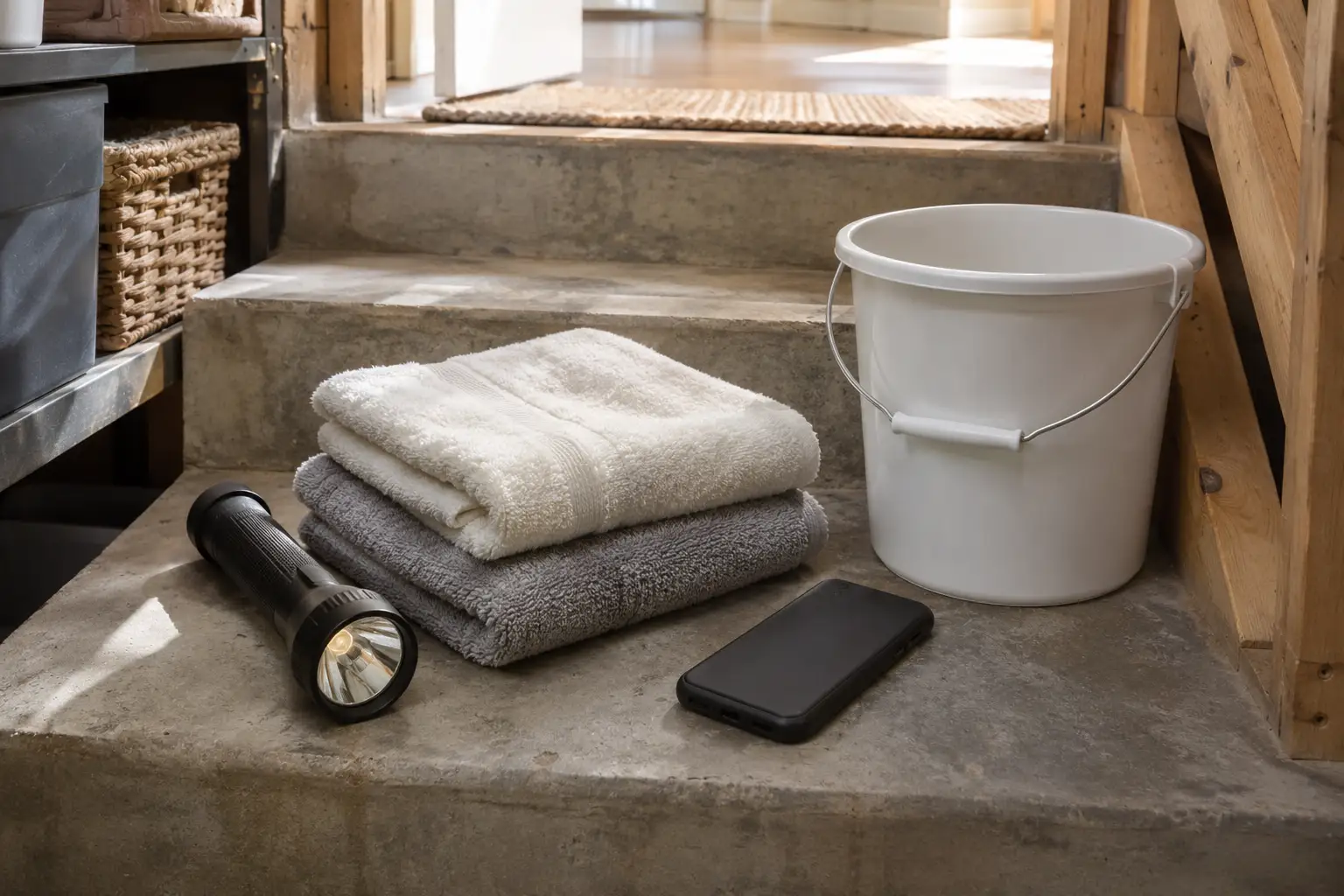
Keep an emergency kit by the basement stairs
Most plumbing emergencies start in the dark, in a basement or under a sink. A small kit kept in one spot saves a frantic search when the floor is already wet.
- A flashlight with fresh batteries
- Old towels and a mop
- A bucket and a large bowl
- Rubber gloves and boots
- Your phone, charged, with our number saved
When sewage backs up into the house
Water rising from a basement floor drain, a shower or the lowest toilet means the main sewer line is blocked or broken. Everything you run upstairs ends up there, so this is a hard stop for the whole house.
- Stop running water, washing laundry and flushing anywhere in the house
- Keep children and pets well away from the area
- Wear gloves and boots if you must step near it, and wash up after
- Do not pour chemical drain cleaner into a backed up drain
- Open a window if the smell is strong
The water is contaminated, so leave cleanup of soaked carpet and drywall until the line is cleared. Sewer backup in the basement explains the causes, and sewer line repair covers what the technician does. A sewer camera inspection afterward shows whether roots or a broken pipe were to blame.
If only one sink or tub is slow and nothing is coming up from below, it is usually a local clog rather than an emergency. When a clogged drain becomes an emergency helps you tell the two apart, and drain cleaning takes care of it. Water seeping in from the walls or floor after heavy snowmelt is a groundwater problem, which points to sump pump repair.
When the water heater leaks
A puddle around the tank can be a loose fitting or a tank that has rusted through. Either way, shut down the heat source before you touch anything.
- Turn off the energy. On a gas heater, turn the control knob to off. On an electric one, switch off its breaker.
- Close the cold supply. The valve is on the pipe that feeds the top of the tank.
- Check the relief valve. If the valve on the side is hissing or spraying, keep clear and never cap or plug it.
- Call us. Tell us the fuel type, roughly how old the heater is and where the water seems to come from.
A scorching smell or rumbling that grows louder is also a reason to shut it off. See water heater repair, or tankless water heater repair for a wall mounted unit. The guide why your water heater stopped working covers the common faults.
When no water comes out
A dry tap is a different kind of emergency. The first question is whether it is one fixture or the whole house.
One fixture or one side of the house
- Likely a frozen line in a cold wall or crawl space
- Open that faucet a little and warm the room
- Never use a torch or open flame on the pipe
- Read how to thaw a frozen pipe
Every tap in the house
- Check that the main valve is fully open
- Ask a neighbor if their water is off too
- Look for a soggy spot in the yard over the service line
- See water line repair
A frozen pipe that thaws can split, so keep an eye on it as flow comes back. If you see water where it should not be, close the main and call about frozen pipe repair.
If you smell gas, leave first
Natural gas carries a rotten egg smell so you notice it. If you catch it, or hear hissing near a gas line, the safe steps are simple and they come before any plumbing.
- Get everyone out of the house, pets included
- Leave doors open behind you if it is easy to do so
- Do not touch light switches, the thermostat or any appliance
- Do not light a match or a lighter, and do not start a car in an attached garage
- Call 911 or the gas company emergency number once you are outside
Only after the gas is shut off and the emergency crew says it is safe does the repair begin. Then read gas line repair and call us about fixing the piping.
What to tell us on the call
You do not need plumbing words. Short, plain answers to a few questions help the technician understand the job before they arrive.
| We may ask | Why it helps |
|---|---|
| What are you seeing right now? | Spraying water, a slow drip and sewage each need different tools. |
| Where in the house is it? | Basement, kitchen, crawl space or ceiling tells the technician where to start. |
| Did you shut off the water or power? | It shows how fast things are moving and what is safe to touch. |
| How old is the house or the fixture? | Older homes may have galvanized steel or cast iron that needs extra care. |
| Is it getting worse? | A spreading stain or rising water changes how urgent the visit is. |
| What is your street and ZIP code? | So the technician knows where in Cheyenne to go. |
If you already tried a plunger, a snake or a chemical drain cleaner, say so. It matters for safety and for how the technician approaches the clog.
A checklist to print and keep
Print this and tape it inside a cabinet near the main valve. In a real emergency, nobody remembers everything.
- I know where the main shut off valve is, and it turns by hand
- I know which breaker controls the basement, the laundry and the water heater
- The kit by the stairs has a flashlight, towels, a bucket, gloves and boots
- The garden hose is disconnected before the first hard freeze
- Cabinet doors on outside walls get opened during a cold snap
- I know the gas company emergency number and to call it from outside
- Our number is saved in my phone under Plumber Cheyenne
- Photos of any damage go to the insurer before cleanup starts
For the year round jobs that keep emergencies rare, use the maintenance checklist. To stop frozen lines before they start, read how to keep pipes from freezing. When a leak is hiding, signs of a hidden water leak and leak detection help you find it.
Questions people in Cheyenne ask
What counts as a plumbing emergency?
Water you cannot stop, sewage coming into the house, a water heater leaking or hissing, no water during a hard freeze, and any gas smell. If damage grows while you wait, treat it as urgent and call us after you shut off the water.
Where is the main water shut off valve?
In most Cheyenne houses it sits low on a basement or crawl space wall where the water line comes in, often near the meter. Some homes have it in a utility closet. Our shut off guide shows the usual spots.
What if the main valve will not turn?
Do not force it with a long wrench, since an old stem can snap and make things worse. Close individual fixture valves where you can, put buckets down and call us. Tell us the valve is stuck so the technician can shut the water at the curb.
Should I turn off the power if water is on the floor?
Only if you can reach the breaker panel without standing in water. Switch off the circuits near the wet area from a dry spot. If the panel itself is wet or you are unsure, stay out of the room and call.
Can I use a hair dryer on a frozen pipe?
A hair dryer on low, kept moving and well away from any standing water, is a reasonable way to warm an exposed pipe. Never use a torch, a heat gun or an open flame. Start nearest the faucet and keep the tap open.
Is it safe to clean up sewage myself?
Small amounts on hard floors can be handled with gloves, boots and disinfectant once the drain is cleared. Soaked carpet, drywall and anything porous usually has to go. Keep children and pets away until the area is clean and dry.
Do I need to be home when the technician comes?
Yes, an adult should be there to let the technician in, show where the problem is and hear the options. The technician explains what they found before any work starts, and you decide whether to go ahead.
Should I call my insurance company first?
Stop the water and make the house safe first, then call us. Take photos of the damage before cleanup and contact your insurer soon after, since many policies ask to be told quickly about water damage.