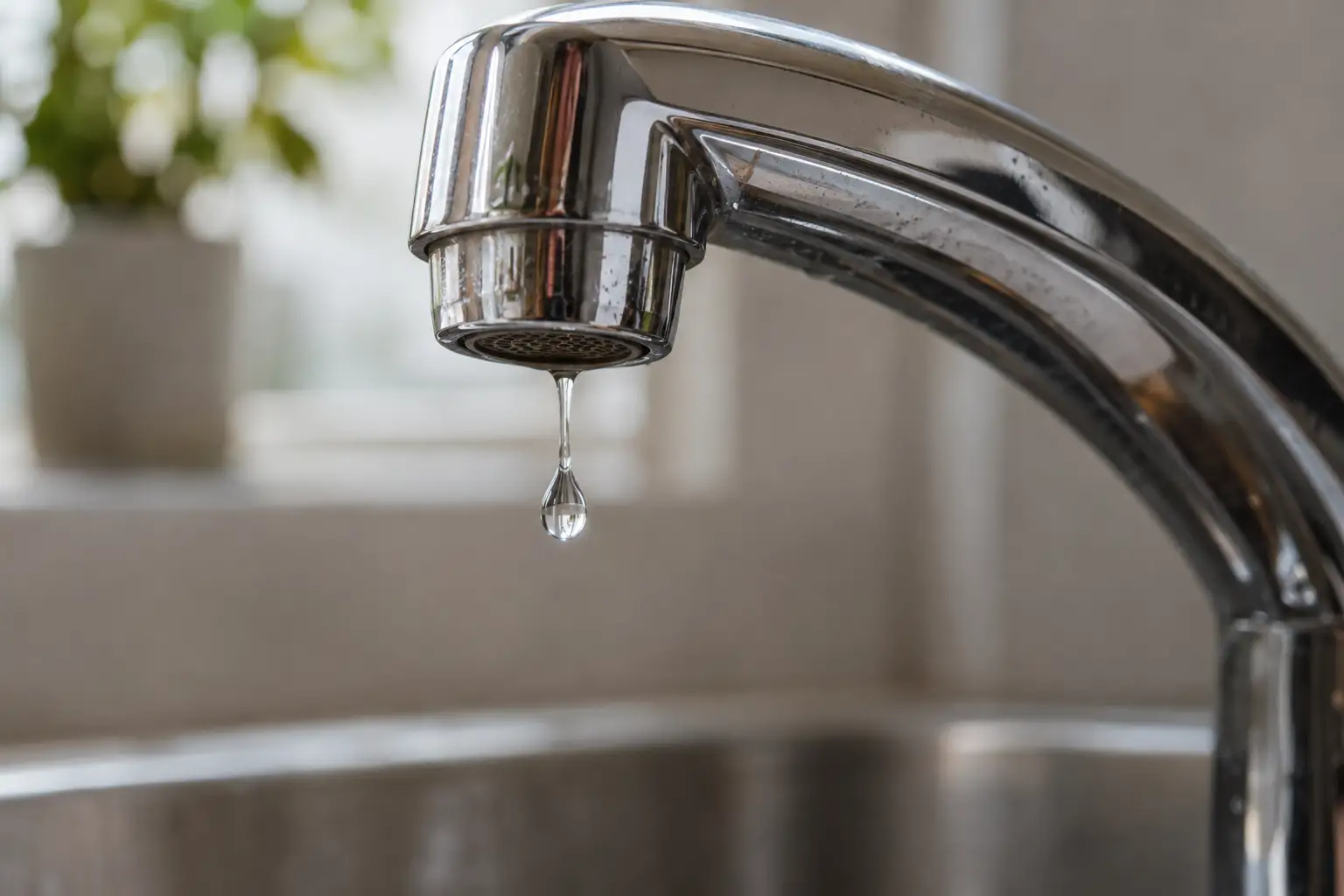
A drip that keeps you up at night, a damp cabinet floor or a sink that takes forever to drain are small problems that rarely fix themselves. Call us for faucet repair in Cheyenne and a local technician can come out to replace the worn part, stop the leak under the sink or put in a new faucet, whether it is in the kitchen, a bathroom or the laundry room.
Before you take anything apart
Most faucet and sink problems are not emergencies, but a leak under the cabinet can quietly ruin the floor of the vanity. A few minutes of prep makes the next step easier.
Close the stop valves
Under most sinks there are two small valves on the wall or floor, one for hot and one for cold. Turn each clockwise until it stops.
Clear the cabinet and add a bucket
Take everything out from under the sink, lay down a towel and set a bucket under the trap and the supply lines.
Plug the drain
If you or anyone else opens the faucet, small screws and clips can disappear down an open drain. A rag or the stopper closes it.
Call Plumber Cheyenne
Tell us where the water shows up, what kind of faucet it is and how old it looks. A local technician can come out with the right parts in mind.
Valves that will not close or start leaking
Old stop valves often seize or drip once they are moved. If one will not shut off, close the main water valve for the house. Our shut off guide shows where to find it.
What faucet repair in Cheyenne covers
Why faucets drip
A dripping faucet almost always means a seal inside has worn out. Which seal depends on the kind of faucet you have, so the technician starts by figuring out the type.
| Faucet type | How to recognize it | What usually wears out |
|---|---|---|
| Compression | Two handles you tighten down to shut off | Rubber washers and the valve seats |
| Cartridge | One or two handles that move smoothly with no grinding | The cartridge and its O rings |
| Ball | A single handle on a rounded cap, common in kitchens | Seals, springs and the ball itself |
| Ceramic disc | A single lever over a wide body, very smooth action | Inlet seals, or a chipped disc |
A drip from the spout points to the parts that shut off the water. Water around the base of the handle or spout usually means an O ring has gone. Replacing the right cartridge or seal is often enough, and a faucet does not need replacing just because it drips.
Leaks under the sink
Water in the cabinet can come from several spots, and they look alike once everything is wet. Dry every pipe with a towel, run the faucet and watch with a flashlight to see where the first drop forms.
- Supply hoses. Plastic or rubber lines crack with age. Braided steel lines last longer.
- Stop valves. The packing nut on an old valve can weep, especially after it is turned.
- P trap. The curved drain pipe has slip nuts that loosen, and old metal traps rust through.
- Basket strainer or drain flange. The seal of plumber's putty under the drain dries out.
- Faucet base. Water running down from the top can look like a leak below.
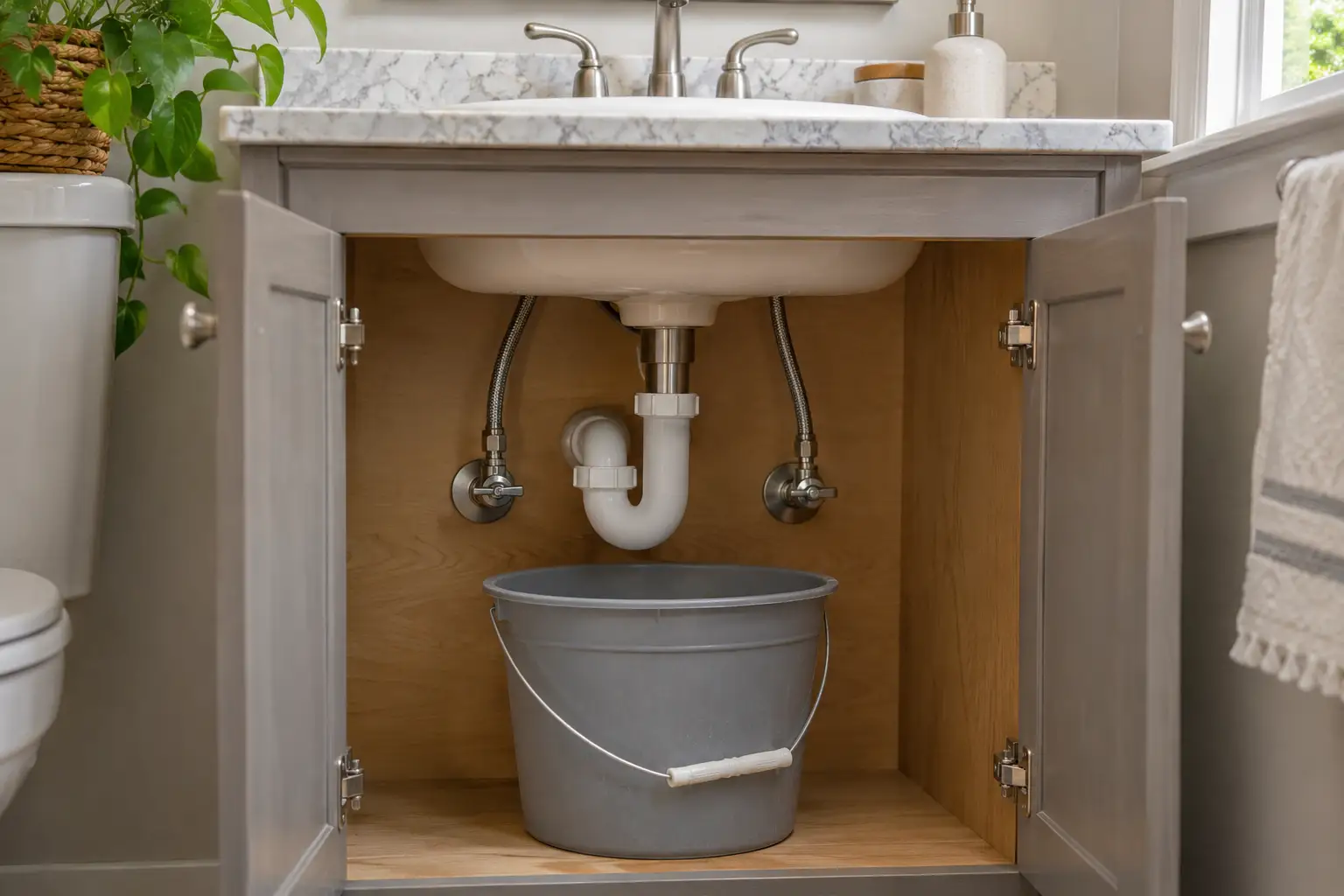
A slow drip into the vanity floor can soften the particle board and feed mold before anyone notices. If you find swelling or a musty smell, it has likely been going on a while. For leaks you cannot place, leak detection narrows it down.
Signs your faucet or sink needs attention
Act right away
- A supply hose burst or is spraying. Close the stop valve or the main and call.
- Water is pooling on the floor from the cabinet. Shut the water off and keep it away from outlets.
Get it seen today
- The cabinet floor is wet every time you use the sink. A drain or trap leak. Stop using that sink.
- The faucet will not shut off fully. A failed cartridge or washer. Close the stop valve.
Can wait a few days
- A steady drip from the spout. Book a repair. It wastes water but is not urgent.
- Weak flow at one faucet only. Often a clogged aerator or cartridge.
Slow sink drains and stoppers
In bathrooms, a slow sink is usually hair and soap wrapped around the pop up stopper or caught in the trap. In kitchens, grease and food scraps coat the pipe until the water barely moves, which comes up often around the holidays when the kitchen is busiest.
The technician pulls and cleans the stopper, takes the trap apart and clears the short drain arm into the wall. If the clog is further down the line, or more than one fixture is slow, the job moves to drain cleaning. A kitchen sink that backs up when the disposal runs may need garbage disposal repair instead.
Avoid chemical drain openers
They can soften old plastic traps, eat at metal pipe and splash back when the trap is opened. If you already used one, tell the technician before any work starts.
Putting in a new faucet
Sometimes a repair is not worth it. A faucet with a cracked body, parts that are no longer made or corrosion that keeps coming back is usually better replaced. A new faucet is also a chance to change the stop valves and supply lines, which tend to be as old as the faucet.
Before you buy, count the holes in the sink or counter and measure the spread between them, so the new faucet fits without extra drilling. Pull down kitchen faucets need room under the sink for the hose and its weight. A WaterSense labeled bathroom faucet or aerator uses less water and still gives good flow.
What happens during the visit
- Find the source. The technician runs the faucet, dries the pipes and checks the supply lines, valves, trap and drain.
- Identify the parts. The faucet type and brand are checked so the replacement cartridge or seal fits exactly.
- Explain the options. You hear whether a repair will hold or a new faucet makes more sense. The work starts once you decide.
- Make the repair. Worn parts are replaced, joints are remade or the new faucet is set and connected.
- Test it. Hot and cold are run, the drain is filled and released, and every connection is checked for drips.
Questions worth asking and simple upkeep
- Is this faucet worth repairing, or are parts for it getting hard to find?
- Are my stop valves and supply hoses due for replacement too?
- Did the leak damage the cabinet floor or the wall behind it?
- Is the slow drain in the trap, or further down the line?
- Unscrew and rinse the aerator a few times a year to clear mineral flakes.
- Peek under each sink once a month with a flashlight and feel for damp wood.
- Turn the stop valves now and then so they still close when you need them.
- Keep grease, coffee grounds and rice out of the kitchen sink.
- Use a hair catcher in bathroom sinks and clean the stopper every few weeks.
If a sink problem turns into water spreading across the floor, the emergency checklist walks you through what to do first.
Questions people in Cheyenne ask
Why does my faucet keep dripping after I turn it off?
A seal inside the faucet has worn out. In older two handle faucets it is usually a rubber washer or the valve seat. In newer faucets it is the cartridge or its O rings. Replacing the right part normally stops the drip without replacing the faucet.
Should I repair or replace my faucet?
Repair makes sense when the faucet body is sound and parts are available. Replacement is usually better when the body is cracked or corroded, parts are no longer made or it keeps failing. The technician explains both options before any work starts.
What is leaking under my bathroom sink?
The most common sources are the supply hoses, the stop valves, the slip nuts on the P trap and the seal under the drain. Dry everything, run the water and watch with a flashlight to see where the first drop forms.
Why is the water pressure low at only one faucet?
If only one faucet is weak, the aerator at the tip of the spout is often clogged with mineral flakes or debris. A partly blocked cartridge can do the same. If every fixture is weak, read why your water pressure is low.
How do I clear a slow bathroom sink?
Pull out the pop up stopper and clean off the hair and soap wrapped around it. If that does not help, the clog is likely in the trap. Skip chemical drain openers, since they can damage pipes and make the repair harder.
Can a new faucet go on my old sink?
Usually, yes, as long as the new faucet matches the number of holes and the spacing between them. A deck plate can cover an extra hole. The technician checks the sink, the valves and the supply lines before the new faucet goes in.
Faucet and sink help across Cheyenne
We take calls about faucets and sinks from homes all over Cheyenne in 82001, 82007 and 82009. Tell us which sink it is and what you see so the technician has a good idea of the job before arriving.
ZIP codes 82001, 82007, 82009