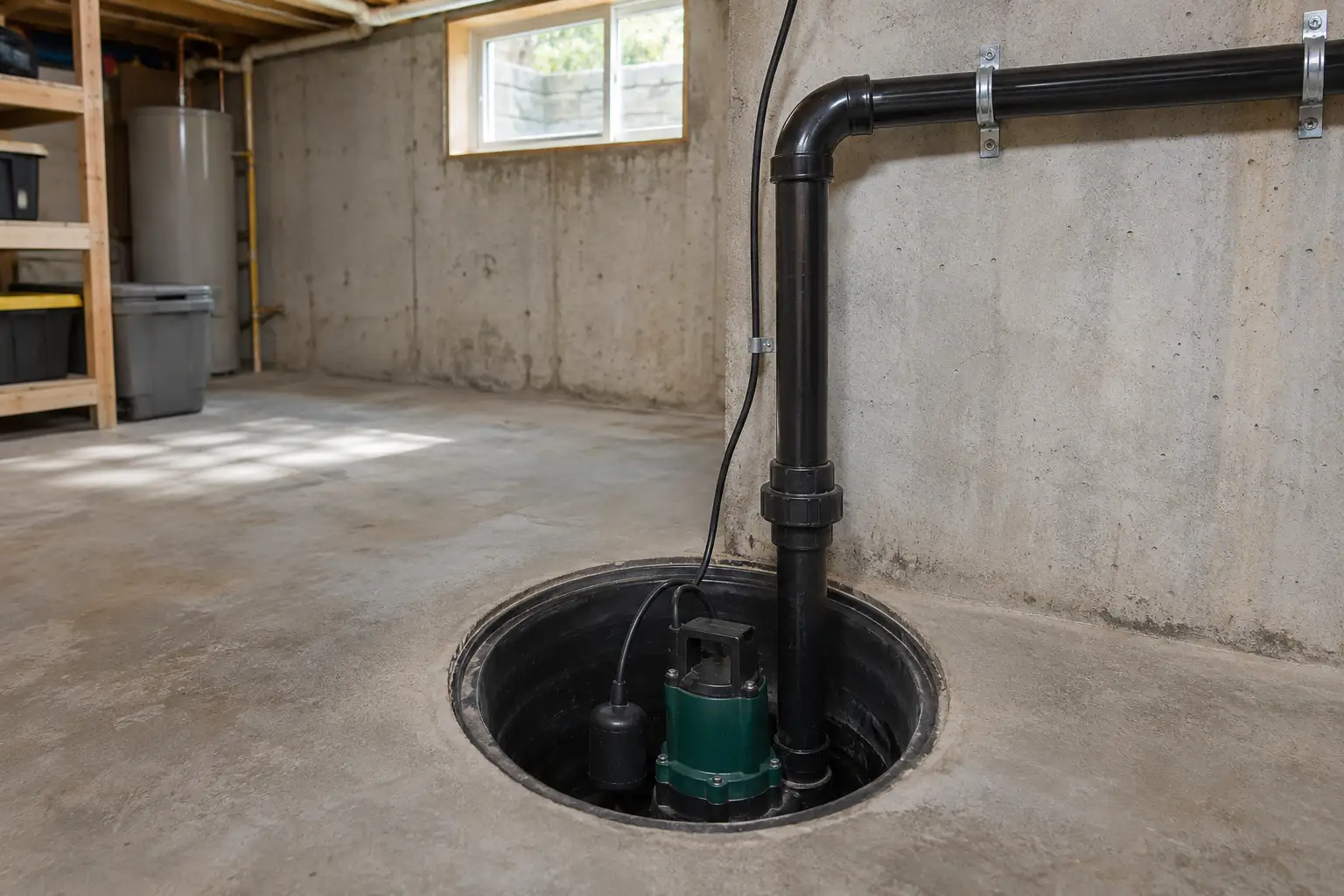
A sump pump sits quietly for months and then has one job on the day the snow melts or a storm rolls through. If yours hums without pumping, runs and runs, or stays silent while water creeps up the pit, call us for sump pump repair in Cheyenne and a local technician can come out to check the pump, the float, the check valve and the line that carries the water away.
Pump not running? Start here
Water and electricity share the same small pit, so safety comes before anything else. These checks take a few minutes and need no tools.
Stay out of standing water
If the basement floor is wet near the pump, its outlet or a cord, switch off the breaker for the basement from a dry spot first. Never step into water to reach a plug.
Check the power
Most pumps plug into an outlet with a test and reset button. If it has tripped, press reset. Check the breaker too.
Look at the float
With the power off, see whether the float is pinned against the pit wall or tangled in the cord. A float that cannot rise never tells the pump to start.
Call Plumber Cheyenne
Tell us how high the water is, whether the pump hums, clicks or stays silent, and whether you have a backup pump. A local technician can come out and take it from there.
If the pit holds sewage, keep away
A sealed pit with a bolted lid and a vent pipe is usually a sewage ejector, not a sump pump. Its contents are contaminated. Keep children and pets out, do not run water or flush, and call.
Warning signs from the pit
Act right away
- Water spilling over the top of the pit. Cut the basement power from a dry spot and call.
- The pump is silent and the pit is filling. Check the outlet reset, then call.
Get it seen today
- The pump runs without stopping. A stuck float or a blocked or frozen discharge line.
- The pump turns on and off every few seconds. Often a failed check valve sending water back in.
Can wait a few days
- A loud clunk when the pump shuts off. The check valve is slamming. Worth a look soon.
- Rust, grinding or a hot motor smell. The pump is wearing out before the busy season.
Flooding now or a repair that can wait
Treat it as urgent
- Water is over the pit rim or spreading across the floor
- The pump has power but does not move any water
- Snow is melting fast or heavy rain is forecast and the pump is down
- Water is near the furnace, water heater or electrical panel
Usually fine to book a visit
- The pump works but clunks or rattles
- The pit is nearly dry and the weather is calm
- You want a backup pump added
- The discharge line drains too close to the house
What sump pump repair in Cheyenne includes
A sump system is more than the pump. The technician checks each part in the chain, because a new pump on a frozen line or a broken check valve fails just as fast as the old one.
Frozen discharge lines in winter
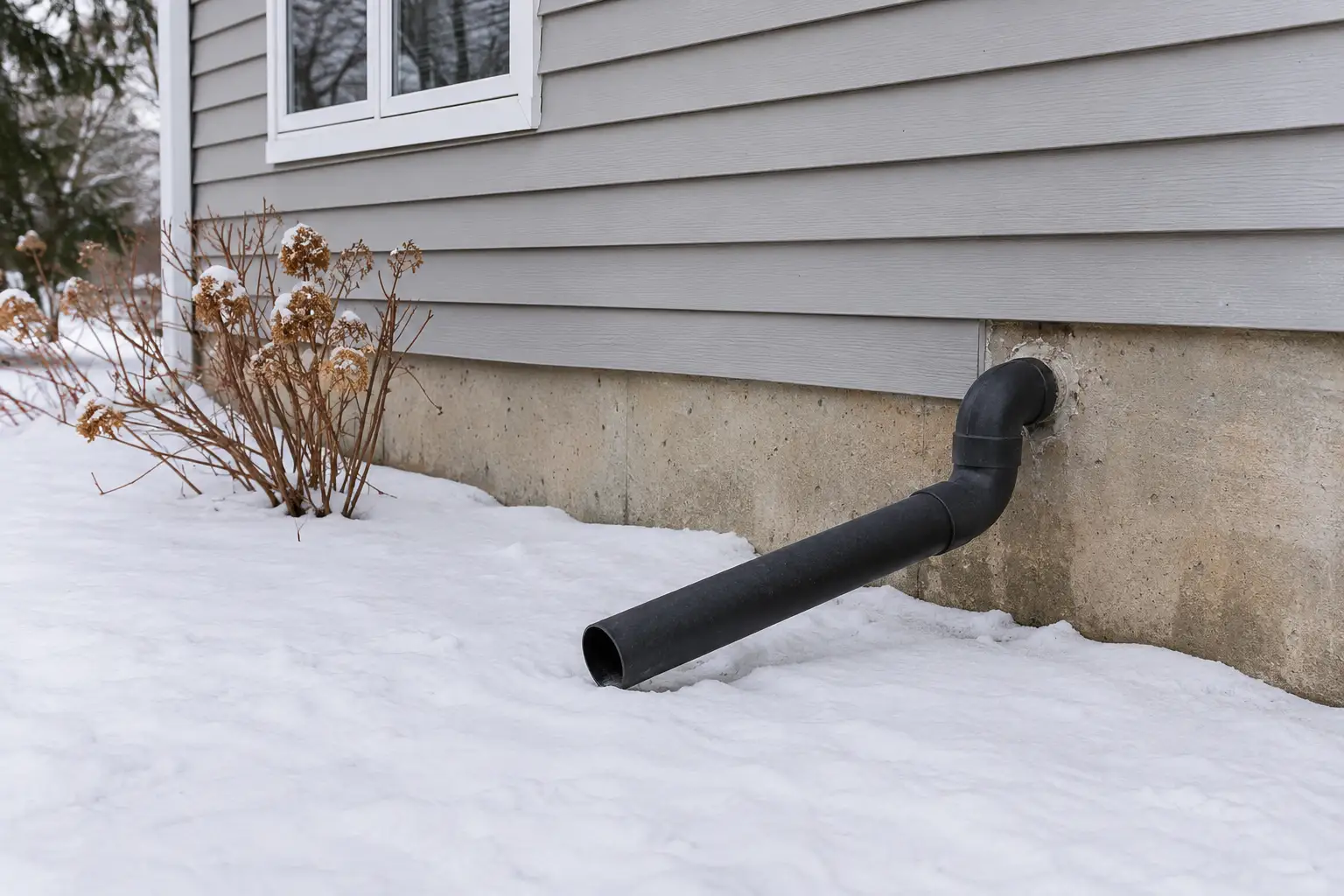
In a Cheyenne winter, the length of discharge pipe outside the house is the weak spot. Water left sitting in the low part of the line freezes into a plug, and the next time the pump starts it pushes against ice and moves nothing.
A pump in that spot often runs nonstop or cycles hard until the motor overheats. Do not put a torch or open flame on the pipe. Clear snow off the outlet, and call if the line stays blocked.
The usual fix is a line that slopes steadily away from the house so it drains between cycles, sometimes with a fitting near the wall that lets water spill out if the far end is iced over. The guide to keeping pipes from freezing covers the indoor side of winter.
Why sump pumps fail
| Cause | What you notice | What usually fixes it |
|---|---|---|
| Stuck or tangled float | Pump never starts, or never stops | Untangle the float, reposition the pump or replace the switch. |
| Failed check valve | Short cycling and a clunk or backflow into the pit | Replace the check valve. |
| Frozen or blocked discharge | Pump runs and the pit does not drop | Clear the line and fix its slope or outlet. |
| Clogged intake or impeller | Hum with little water moving | Clean the pump and pit, add a lid or screen. |
| Tripped outlet or bad cord | No sound at all | Find why it tripped and restore safe power. |
| Worn out motor | Overheating, grinding, weak flow | Replace the pump and test the whole system. |
Pumps that sit dry for most of the year are prone to sticking. The seals and float can seize from disuse, which is why a pump that worked last spring may not respond on the first warm week of snowmelt.
Backup pumps worth knowing about
A backup sits in the same pit, a little higher than the main pump, and starts only if the water keeps rising. It covers a dead motor, a stuck float and a power outage during a storm.
- Battery backup. A second pump runs from a battery that stays charged. Batteries age, so they need checking and replacing over time.
- Water powered backup. Uses household water pressure to pull water out of the pit, with no battery to wear out. It needs a supply line nearby.
- High water alarm. A simple float alarm that sounds when the pit is close to full. It does not pump, but it tells you before the floor is wet.
From the first look to the test run
- Make it safe. The technician confirms the power situation and lowers the water if needed.
- Check every part. Pump, float, check valve, discharge line and outlet are tested one by one.
- Explain the options. You hear what failed and whether a part, a new pump or a backup makes sense. Nothing starts until you say go ahead.
- Fill and test. The pit is filled with water until the float lifts, and the technician watches the pump start, empty the pit and shut off cleanly.
Questions worth asking
- Did the pump fail, or did something around it make it fail?
- Does the discharge line slope away and drain between cycles?
- Is the check valve installed the right way and holding?
- Would a backup pump or high water alarm make sense in this basement?
If the basement is already wet, the emergency checklist lists what to do and note while you wait.
Test it before the spring thaw
The best time to find a weak pump is a dry day, not the morning after a storm. A few minutes each fall and spring is enough.
- Pour a bucket of water slowly into the pit and watch the float lift and the pump start and stop.
- Listen for grinding, rattling or a clunk when it shuts off.
- Walk outside and check that water comes out of the discharge line and flows away from the foundation.
- Clear snow and ice off the outlet after every big snowfall.
- Keep the pit covered and clear of rocks, toys and debris.
For storm planning in general, Ready.gov has a checklist worth a look. If water shows up in the basement with a working pump, the source may be a supply line instead, and leak detection can find it.
Questions people in Cheyenne ask
Why does my sump pump run all the time?
A pump that never stops usually has a float stuck in the up position, a discharge line that is frozen or blocked, or a failed check valve sending water back into the pit. In winter, a frozen outdoor line is the first thing to check.
How do I test a sump pump?
Pour a bucket of water slowly into the pit. The float should rise, the pump should start, empty the pit and then shut off on its own. If it stays silent, hums without pumping or keeps running, call for a repair.
What does a sump pump check valve do?
It is a one way valve in the discharge pipe just above the pump. It stops the water in the pipe from falling back into the pit each time the pump shuts off. When it fails, the pump short cycles and wears out sooner.
Can a sump pump discharge line freeze?
Yes. Water left in the outdoor part of the line can freeze solid in cold weather. The pump then runs against the ice and moves no water. A line that slopes away from the house and drains between cycles is the usual fix.
Do I need a backup sump pump?
If a wet basement would damage finished rooms, stored items or appliances, a backup is worth considering. It takes over when the main pump fails or the power goes out. A high water alarm is a simpler option that warns you early.
Is it safe to reach into a sump pit?
Only with the power off. Switch off the breaker from a dry spot and unplug the pump before touching the float or the pump. If the floor is wet around the outlet, do not reach for the plug. Call instead.
Sump pump repair for Cheyenne basements
We take calls about sump pumps in every part of Cheyenne, especially during spring snowmelt and summer storms. Tell us the street and how high the water is when you call.
ZIP codes 82001, 82007, 82009