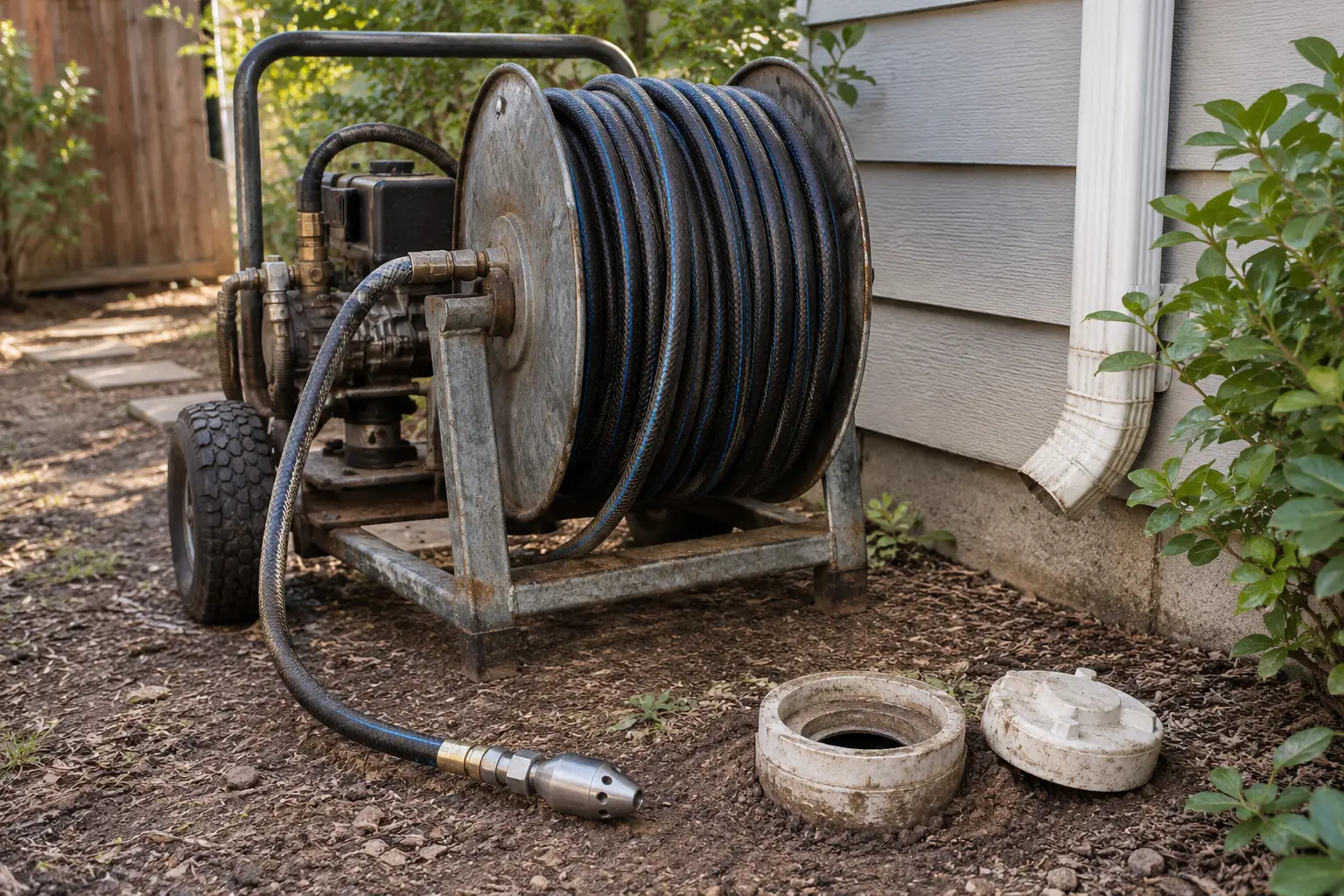
Hydro jetting cleans a drain or sewer line with water at very high pressure, scrubbing grease, scale and roots off the pipe walls instead of punching a hole through the middle. When a line keeps clogging, hydro jetting in Cheyenne is often the step that gets it properly clean. Call us and a local technician can come out, look at the pipe and tell you whether jetting suits it.
What hydro jetting is and when it makes sense
A jetter pushes water through a flexible hose to a nozzle with small openings. Some point backward to drive the hose forward, and others point out toward the pipe walls. As the hose is drawn back, the jets scour the full circle of the pipe.
It is a strong tool, so it is used where a regular cable falls short. These are the jobs it handles best.
- A kitchen line coated in grease that clogs again soon after cabling
- Tree roots that have grown into a sewer line through the joints
- Heavy scale or sludge inside older cast iron drains
- Sand, silt or debris packed into a floor drain or main line
- Periodic cleaning for a line that serves a busy household
Jetting is not for every pipe.
Water at high pressure can make a cracked or collapsed pipe worse, and old clay or badly corroded lines may not stand up to it. The technician usually looks inside the line with a camera first.
Hydro jetting in Cheyenne compared with a drain cable
| Question | Drain cable | Hydro jetting |
|---|---|---|
| How it works | A spinning steel cable cuts or grabs the clog | Water at high pressure scours the whole pipe wall |
| Best for | Single clogs, hair, wipes and soft blockages | Grease, scale, sludge and roots that grew back |
| What it leaves behind | An open path, with buildup still on the walls | A pipe cleaned close to its original width |
| Pipe condition needed | Works on most pipe | Pipe should be sound and checked first |
| Typical drains | Sinks, tubs, toilets and branch lines | Kitchen lines, main lines and sewer lines |
Many visits start with a cable because it is the simpler tool. Jetting comes in when the same line keeps clogging or the camera shows buildup along its length. The drain cleaning page covers the cable side of things.
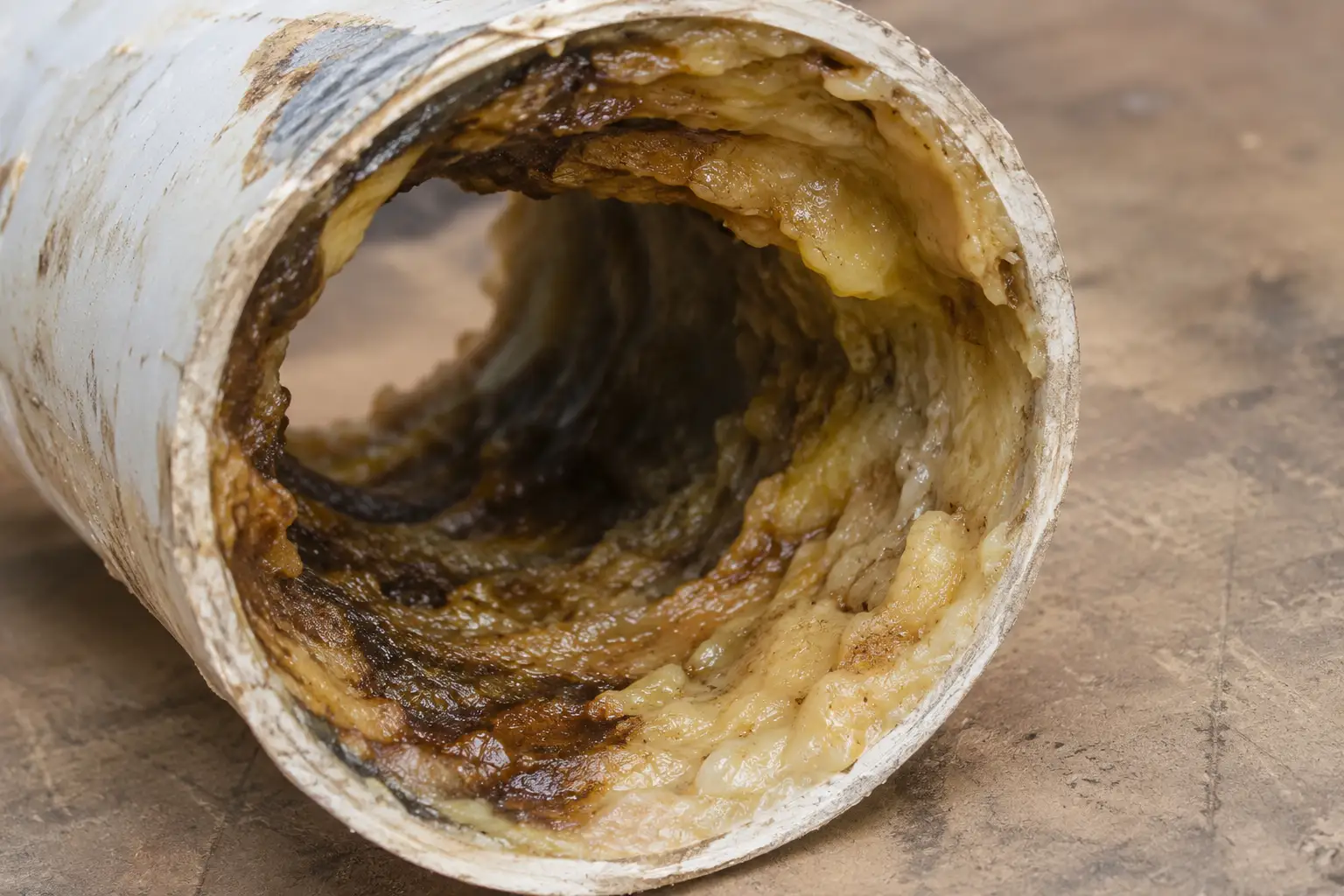
This is what a kitchen drain looks like after years of grease. The opening shrinks until a little food or a cup of cooled fat is enough to close it off.
A cable opens a path through the middle and the drain works again, but the coating stays put. Jetting strips that layer from the walls, which is why it is often the better choice for a line that clogs every few months.
Roots behave in a similar way. Cutting them back opens the line, but they regrow from what remains. Jetting clears the fine root hairs and trapped debris more completely, and the camera shows whether the joint they came through needs sewer line repair.
Signs a line may need jetting
Act right away
- Sewage backing up into the lowest drain. Stop using water and call. The main line is blocked.
Get it seen today
- The same drain clogged again soon after a cleaning. Buildup on the walls is likely. Ask about jetting.
- Every drain on the lowest floor is slow. The main line is partly blocked.
Can wait a few days
- Gurgling when a tub or washer empties. Air is squeezing past a partial blockage.
- A sour sewer smell near a floor drain. Sludge in the line or a dry trap. Worth a look.
- Roots found in the line on an earlier visit. Plan a cleaning before they close it again.
How a hydro jetting visit goes
- Look before jetting. The technician asks about the clog history and usually runs a sewer camera inspection to see the pipe material and its condition.
- Explain what was found. You hear whether jetting suits the pipe, what else might help and what the work involves. Nothing starts until you decide.
- Set up at a cleanout. The hose goes in through a cleanout or another access point the technician picks, and the area around it is protected.
- Jet the line. The nozzle is worked down the pipe and drawn back slowly so the jets clean the walls as it goes.
- Check the result. The camera can go back in so you can see the cleaned pipe, and the fixtures are run to make sure they drain.
Is hydro jetting safe for my pipes?
On sound pipe, yes. PVC, ABS and cast iron in fair condition handle jetting well, and the technician matches the pressure and nozzle to the pipe size. The risk comes from pipe that is already damaged.
Good candidates
- PVC and ABS drain lines
- Cast iron with scale but no holes or flaking rust
- Sewer lines with grease or light root growth
- Kitchen lines that clog over and over
Better handled another way
- A collapsed or crushed section of pipe
- Clay or cast iron with large cracks or missing pieces
- A belly where the pipe sags and holds water
- Very old, thin pipe the camera shows is near failure
If jetting would be too hard on that pipe, the technician explains other options, such as clearing it with a cable for now and repairing the damaged section.
Questions to ask before jetting
- What did the camera show, and what is the pipe made of?
- Is jetting the right tool here, or would a cable do?
- Are there roots, and where are they getting in?
- Will the line need a repair as well as a cleaning?
- How often should this line be cleaned from here on?
For the day something backs up with no warning at all, the plumber emergency checklist lists what to do first.
Keeping a jetted line clean
Jetting resets the pipe, but daily habits decide how long it stays clean. Keep grease, fats and oils out of the kitchen sink by wiping pans and pouring cooled fat into the trash. Run the disposal with plenty of cold water and keep starchy peels out of it, especially around holiday meals.
Only toilet paper belongs in the toilet. Wipes do not break down, and they snag on any rough spot or root in the line.
If roots were part of the problem, ask the technician how often the line should be checked. Catching regrowth early is easier than clearing a full blockage. The maintenance checklist has a few more habits worth keeping.
Questions people in Cheyenne ask
What is hydro jetting?
It is a way of cleaning drain and sewer lines with water at very high pressure. A hose with a special nozzle is fed into the pipe, and the jets scrub grease, scale, sludge and roots off the inside walls as the hose is drawn back out.
Is hydro jetting better than snaking a drain?
It depends on the clog. A cable is the right tool for a single blockage like hair or a wipe. Jetting is better for buildup along the whole pipe, such as grease or regrown roots, because it cleans the walls instead of just opening a path.
Can hydro jetting damage pipes?
On pipe in good condition it should not. Cracked, collapsed or badly corroded lines are a different story, which is why the technician usually looks with a camera first. If the pipe is too weak, you will hear that before any work starts, along with other options.
Does hydro jetting remove tree roots?
It clears roots and the debris they catch, often more completely than a cable. It does not seal the joint they grew through, so roots can return over time. The camera shows where they got in and whether that section needs a repair.
How often should a sewer line be jetted?
Most lines never need regular jetting. A kitchen line with heavy grease or a sewer line with root trouble may need it every so often. The technician can suggest a schedule after seeing how much buildup came out and what the pipe looks like.
Will hydro jetting make a mess in my house?
The hose usually goes in through an outside or basement cleanout, so the water stays inside the pipe and flows out to the sewer. The technician protects the area around the access point and runs your fixtures afterward to make sure everything drains.
Hydro jetting across Cheyenne
We take calls for hydro jetting from homes all over Cheyenne in 82001, 82007 and 82009. Mention any past clogs or camera findings when you call so the technician can plan the visit.
ZIP codes 82001, 82007, 82009