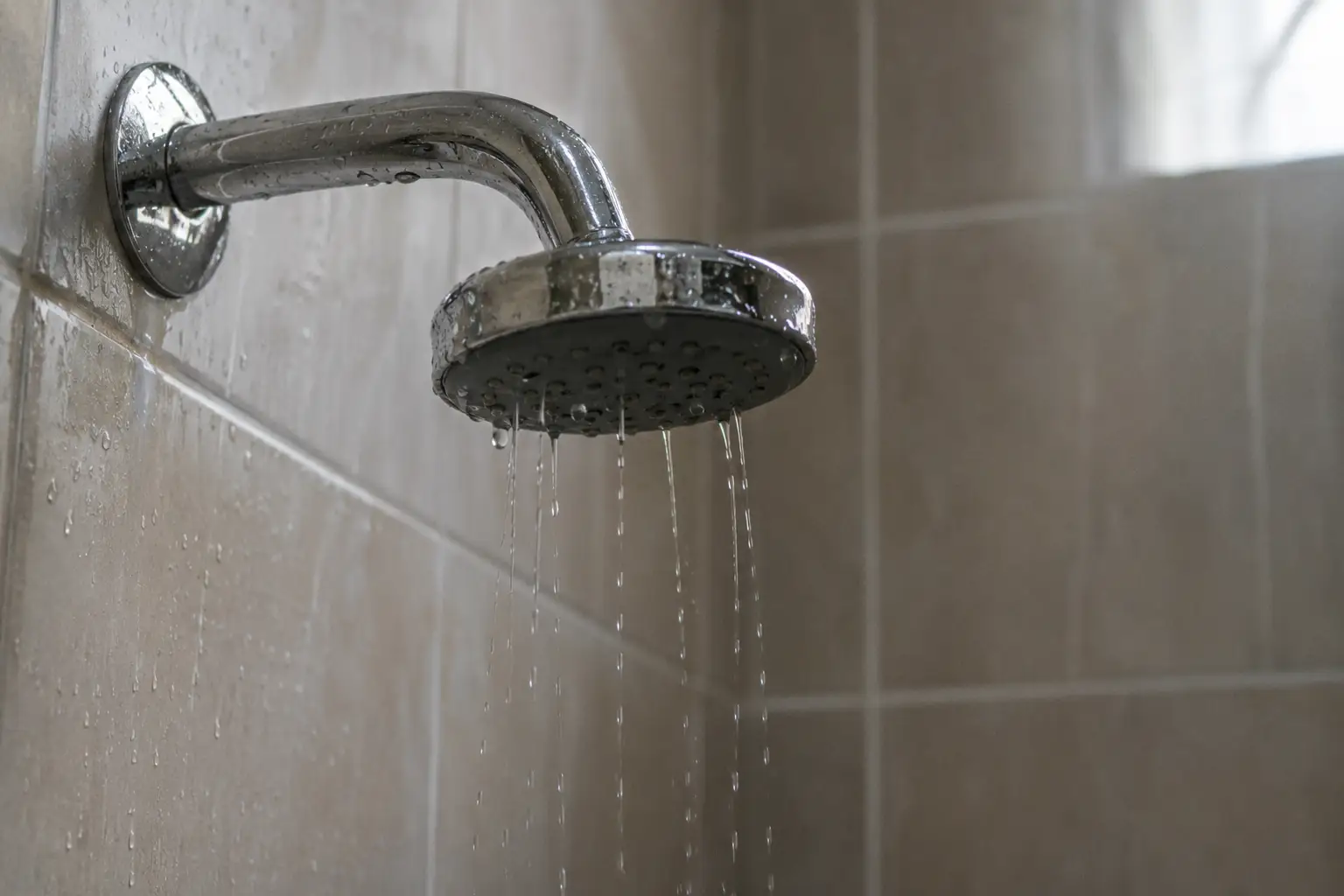
Low water pressure in the house is one of those problems that creeps up until a shower feels like a drizzle. The first clue is whether it affects one fixture or every tap. That single answer narrows the cause from a clogged aerator to a failing valve, old pipe or a hidden leak, and this guide walks through each one for Cheyenne homes.
Low water pressure at one fixture or the whole house?
The short answer
If only one faucet or shower is weak, the problem is almost always at that fixture, usually a clogged aerator, shower head or cartridge. If every tap is weak, look at the main valve, the pressure reducing valve, old galvanized pipe or a leak. Test the hot and cold sides separately too, since a weak hot side alone points to the water heater.
Only one fixture is weak
- A clogged aerator or shower head
- A worn or clogged faucet cartridge
- A stop valve under the sink left partly closed
- A kinked or crushed supply line
Every fixture is weak
- The main shut off valve is not fully open
- A failing pressure reducing valve
- Corroded galvanized pipe
- A leak somewhere in the system
- A frozen section of line in winter
Start with the aerator and shower head
Unscrew the aerator
The aerator is the small screen at the tip of the faucet. Wrap it in a cloth and turn it counterclockwise by hand or with pliers.
Look for grit and scale
Sand, bits of rubber and white mineral crust collect on the screen, especially after any work on the water line. Rinse it, and soak crusty screens in white vinegar for an hour.
Run the faucet without it
If the flow is strong with the aerator off, you found the problem. Clean or replace it and screw it back on.
Do the same for the shower head
Most shower heads unscrew from the arm. A vinegar soak clears the small holes. Some heads also have a flow restrictor behind the screen that can clog.
If the faucet is still weak with the aerator off, the cartridge inside the handle may be clogged or worn. That is a common fix during faucet and sink repair, and shower and tub repair covers shower valves that stick. Low flow fixtures are designed to use less water but should still feel steady, and the EPA WaterSense program explains how they are tested.
Valves that are partly closed
After a repair or a move, it is common to find the main shut off valve only partly open. A gate valve with a round handle should be turned counterclockwise until it stops. A ball valve with a lever is fully open when the lever sits in line with the pipe.
Check the valve on the cold line at the water heater too, along with the small stop valves under sinks and behind toilets. A valve that someone turned down to stop a drip years ago can quietly choke the flow to a whole bathroom.
Open old valves gently
If a gate valve feels stiff, do not force it. Old stems can break inside and leave the valve stuck closed. The guide on shutting off your water shows how each valve type works.
Pressure reducing valve trouble
Many homes have a pressure reducing valve, a bell shaped brass valve on the main line just after the shut off. It brings the incoming pressure down to a level the plumbing can handle. When the spring or diaphragm inside wears out, pressure can drop sharply or swing up and down through the day.
A simple gauge that threads onto a hose bib or laundry faucet shows what the house is getting. Close every faucet, open the one with the gauge and read the needle. Plumbing guidance commonly treats roughly 40 to 80 psi as a workable range for a home. A reading well below that, or one that keeps changing, is worth a call.
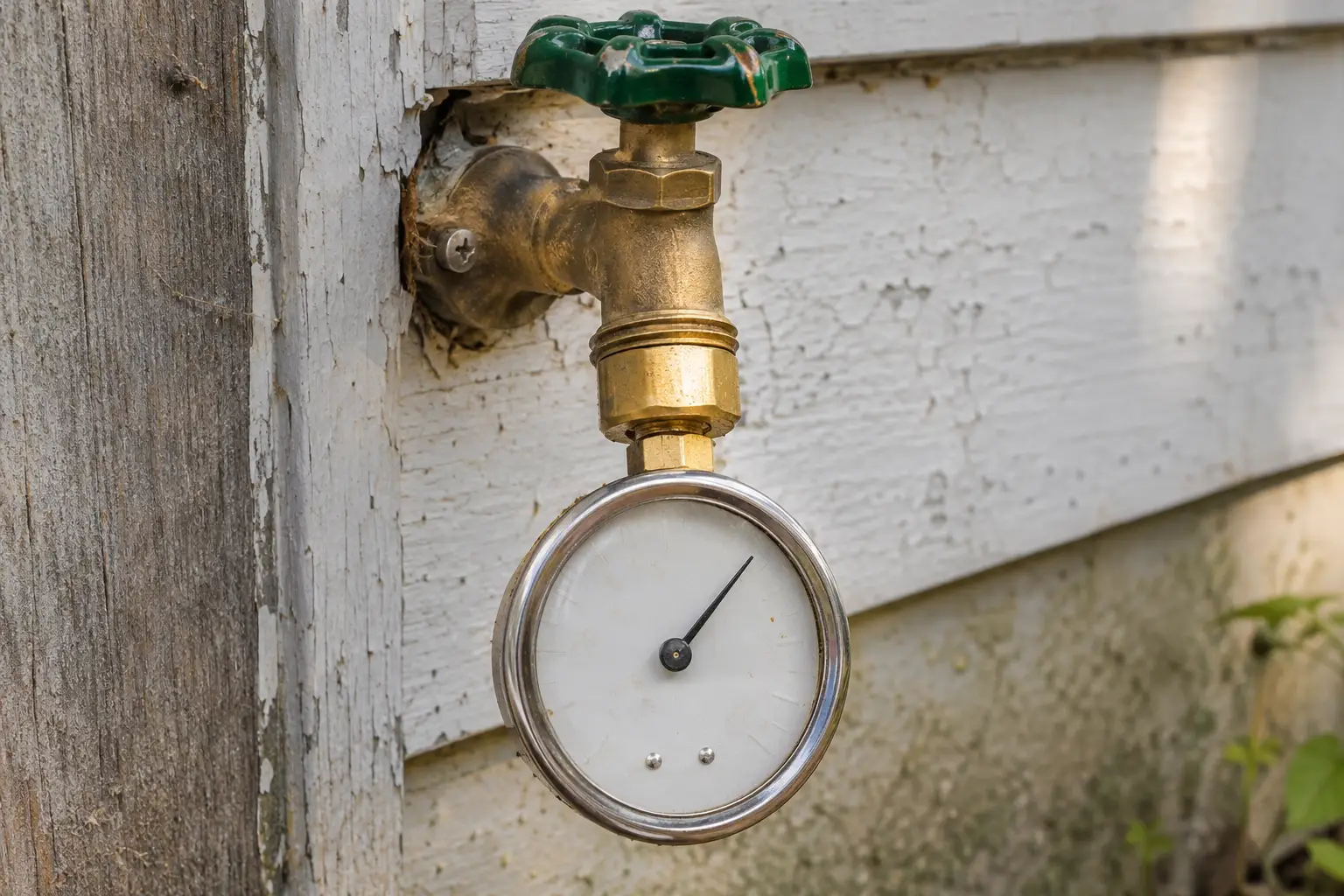
Do not turn the adjusting screw on top of the valve without knowing its range. Turning it the wrong way can push pressure too high, which strains fittings, the water heater and appliance hoses. The technician can test the valve, adjust it or replace it.
Old pipe, leaks and frozen lines
| Cause | How it shows up | What usually fixes it |
|---|---|---|
| Galvanized pipe buildup | Pressure fades slowly over years, worse upstairs, sometimes rusty water | Replacing the worst runs, or repiping |
| A hidden leak | Pressure drops and the meter moves with every tap closed | Finding the leak and repairing it |
| A damaged service line | Low pressure everywhere, sometimes a soggy spot in the yard | Repairing or replacing the line from the street |
| A frozen section of pipe | Sudden low or no flow on a very cold morning | Gentle thawing, then a check for splits |
| A problem at the water heater | Only the hot side is weak | Checking the heater valves, fittings and dip tube |
Galvanized steel rusts from the inside, and the buildup narrows the pipe a little more each year. If your home still has it, the technician can explain whether a few sections or full repiping makes more sense. A leak in a wall or under a slab also steals pressure, which is where leak detection comes in, and a cracked supply line from the street calls for water line repair.
Low pressure on a frozen morning
In a hard Cheyenne freeze, a sudden drop on one side of the house often means ice in a line. Leave the faucet open, warm the area gently and never use an open flame. Read how to thaw a frozen pipe, and call us if you cannot find the frozen spot.
Mistakes to avoid with low pressure
- Cranking up the pressure reducing valve. Higher pressure can hide the real problem while it wears out fittings and hoses.
- Adding a booster pump first. It can make sense in some homes, but not until the cause is known.
- Ignoring a meter that keeps moving. A slow leak drains pressure and keeps soaking whatever it touches.
- Taking apart a shower valve with the water on. Close the supply first, or you may be dealing with a spray instead of a trickle.
- Using heat guns or torches on a frozen line. Gentle warmth thaws it without starting a fire or cracking the pipe.
What the technician checks
- A pressure reading at an outdoor faucet and at a fixture inside, to compare the two
- The main shut off valve and the pressure reducing valve
- The pipe material and its condition wherever it can be seen
- The water meter with all fixtures closed, to rule a leak in or out
- The hot side at the water heater when only hot water is weak
You hear what the readings show and what the options are before any work starts, and you decide what happens next. There is more on that in how it works. If hot water is the only weak side, the guide on why a water heater stops working is a useful next read.
Keeping the flow strong
- Clean aerators and shower heads a couple of times a year
- Turn the main valve and fixture stop valves once a year so they never seize
- Check the house pressure with a gauge each spring and note the number
- Insulate pipes in garages, crawl spaces and outside walls before winter
- Watch for rusty water, which can mean galvanized pipe is near the end of its life
These fit neatly into the plumbing maintenance checklist, and the guide on keeping pipes from freezing covers the winter side.
Questions people in Cheyenne ask
Why is my water pressure low in only one faucet?
When the rest of the house is fine, the cause is almost always at that faucet. A clogged aerator, a worn cartridge, a partly closed stop valve under the sink or a kinked supply line are the usual suspects. Start by unscrewing the aerator and running the faucet without it.
Why did my water pressure drop suddenly?
A sudden drop across the house can mean a main valve was bumped, a pressure reducing valve failed, a line froze in cold weather or a pipe broke somewhere. Check the meter with every tap closed. If it keeps moving, close the main valve and call, since water may be escaping.
Why is only my hot water pressure low?
If the cold side is strong and the hot side is weak, look at the water heater. A partly closed valve on the heater, sediment in the tank, a broken dip tube or scale in the fittings can all slow the hot side. The technician can check each one.
What is a normal water pressure for a house?
Plumbing guidance commonly treats roughly 40 to 80 psi as a workable range for a home, with many houses set toward the middle. Very low readings make showers weak, and very high readings strain fittings and appliances. A gauge on a hose bib gives a quick reading.
Can old pipes cause low water pressure in a house?
Yes. Galvanized steel pipe rusts from the inside and the buildup narrows it over time, so pressure fades slowly and often feels worst upstairs. Copper and PEX rarely clog this way. If your home has galvanized lines, the technician can explain whether repairs or repiping make sense.
Is low water pressure an emergency?
Usually not, unless it comes with a sign of a leak or a frozen pipe. A spinning meter with all taps closed, a wet spot on a wall or ceiling, or a sudden loss of water on a very cold day all call for closing the main valve and calling us.