A plumbing maintenance checklist keeps small problems small. Most of the jobs below take a few minutes, and the ones that matter most in Cheyenne happen in the fall, before the first hard freeze. Work through it season by season, jot down what you find, and call us when a check turns up something that needs a technician.
How to use this plumbing maintenance checklist
The short answer
Do a few quick checks every month, a handful of jobs each season and a short list once a year. Monthly checks catch leaks early. Seasonal jobs get the house ready for freezing weather and snowmelt. Yearly tasks keep the water heater, sump pump and valves working when you need them most.
Monthly checks
- Open the cabinets under each sink and feel the pipes, the trap and the cabinet floor for moisture
- Listen for a toilet that runs or refills on its own. A few drops of food coloring in the tank that show up in the bowl mean a leaking flapper
- Look at the base of the water heater for water, and at the end of the relief valve pipe for drips
- Pour a bucket of water into basement floor drains that rarely get used so their traps stay full
- Read the water meter at bedtime and again first thing in the morning with no water used. Any change points to a leak
Catching a slow drip early is the whole point of the monthly round. The guide on signs of a hidden water leak covers what to look for inside walls and ceilings, and leak detection is there when the meter moves and you cannot see why.
Fall freeze prep
Fall is the most important season on this list for a Cheyenne home. Cold snaps can arrive early, and pipes in garages, crawl spaces and outside walls are the first to freeze.
Disconnect garden hoses
A hose left on an outdoor faucet traps water in the valve body, and that water can freeze and split the pipe inside the wall.
Shut off and drain outdoor faucets
If your outdoor faucets have a shut off valve inside, close it and open the outside faucet so the line drains. Freeze resistant faucets still need the hose off to drain properly.
Insulate exposed pipes
Foam sleeves on pipes in the garage, crawl space and unheated rooms are a simple step. Seal drafts where pipes pass through outside walls.
Drain the sprinkler system
Irrigation lines and the backflow device need to be drained or blown out before freezing weather settles in.
Find and test the main shut off
Turn it once to be sure it moves. A stuck valve is far easier to deal with in October than in the middle of a burst pipe in January.
More detail is in how to keep pipes from freezing, and outdoor faucet repair covers faucets that drip or split.
Winter watch
- Keep the heat at a steady setting, including at night and while you travel
- Open sink cabinet doors on outside walls during a cold snap
- Let a faucet on an outside wall drip on the coldest nights
- Watch for low pressure or no flow on a bitter morning, which can mean a frozen line
- Keep snow clear of any water heater vent that exits through a wall
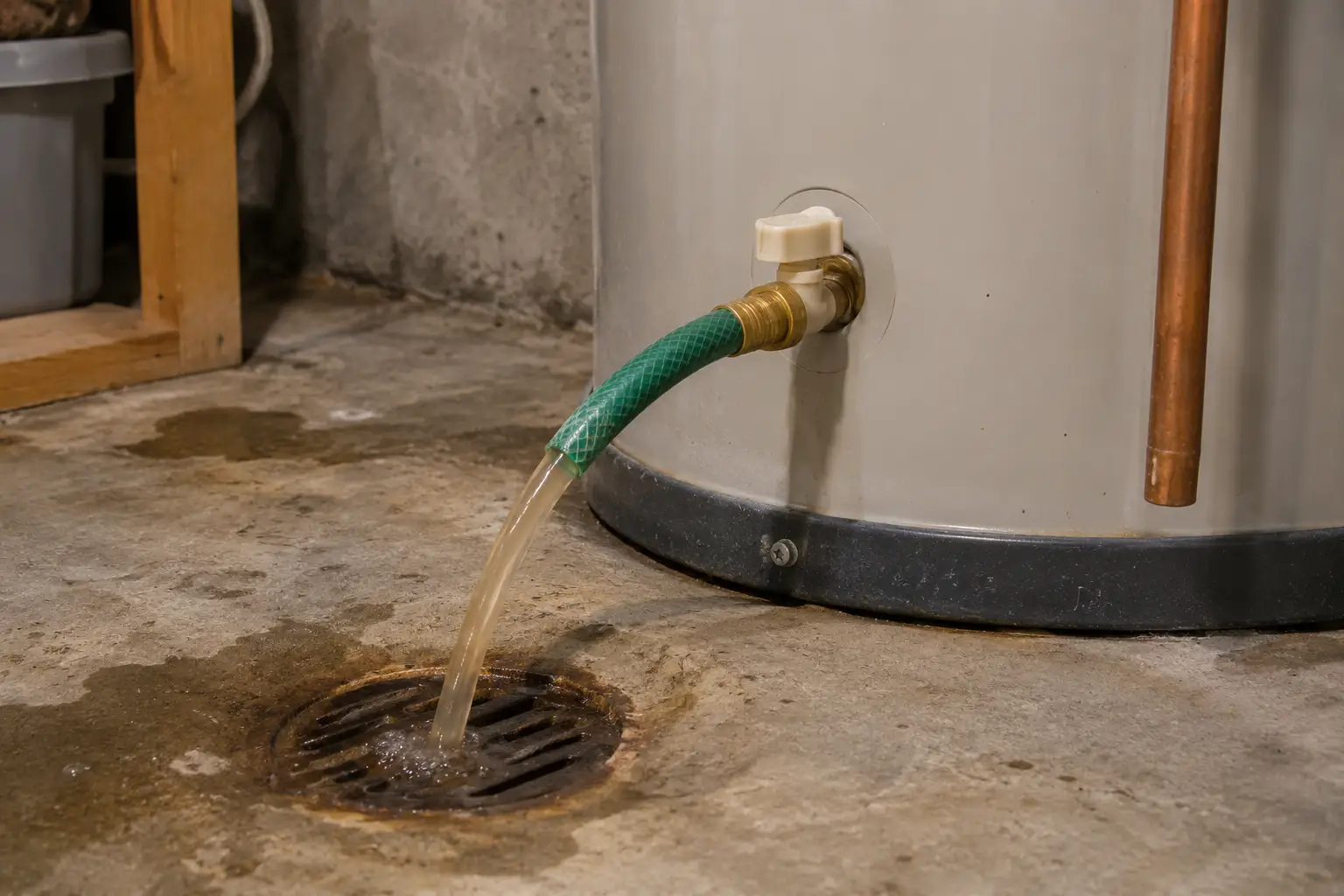
Winter is also a sensible time to flush the water heater through its drain valve. The tank works hardest when the incoming water is cold, and sediment on the bottom slows it down.
If a pipe does freeze, never use an open flame or a torch. See how to thaw a frozen pipe, or call about frozen pipe repair if you cannot find the spot.
Spring snowmelt checks
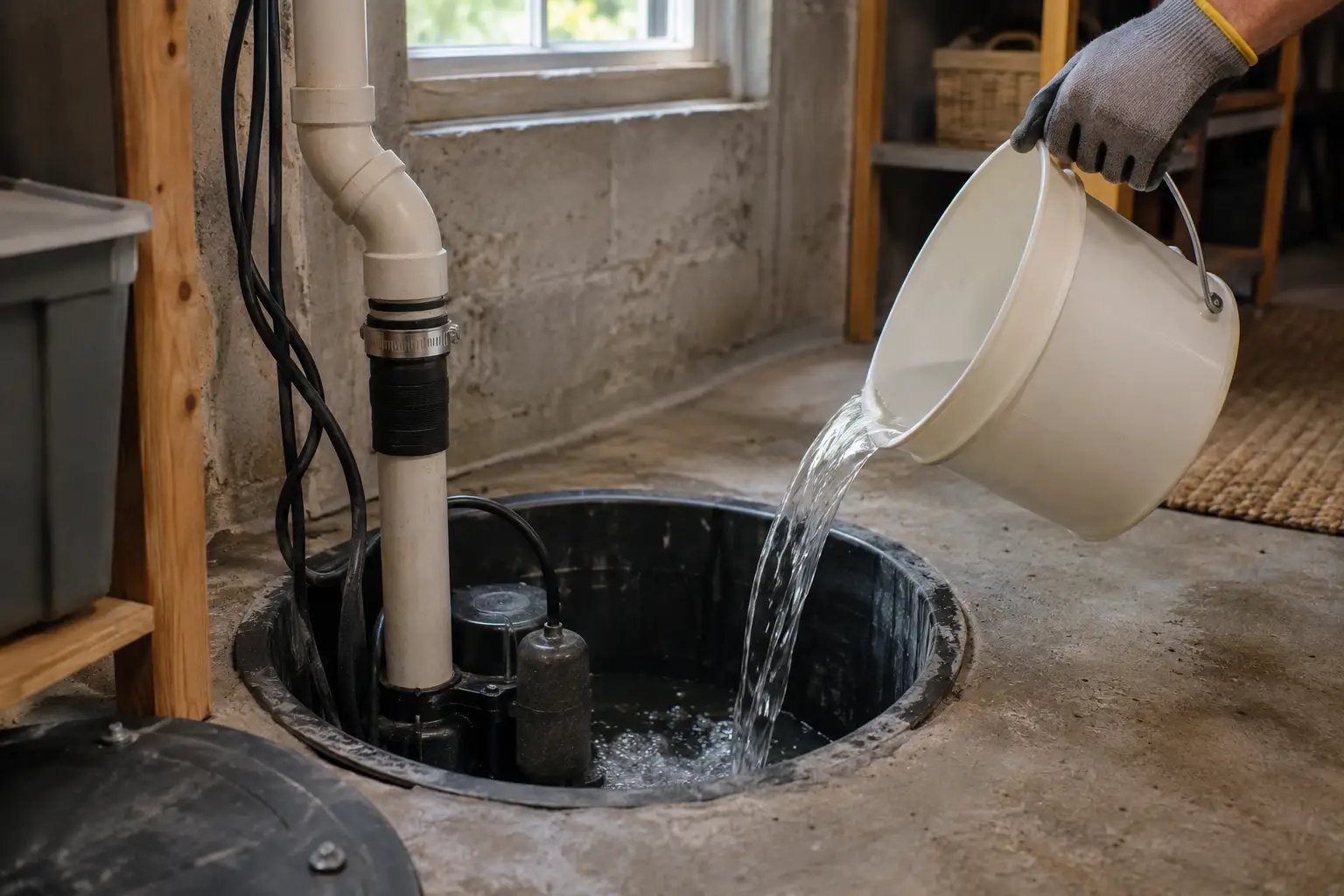
- Test the sump pump by pouring water into the pit until the float lifts and the pump runs and empties it
- Make sure the sump discharge pipe outside is clear of ice and debris and points away from the foundation
- Turn outdoor faucets back on slowly and check inside the wall for drips, since a split from winter often shows up only now
- Walk the basement once the snow melts and look for damp spots near the floor drain and along the walls
- Check the sprinkler system for cracked heads and leaks before the first full run
A pump that hums but does not empty the pit, or a pit that fills with no rain or melting snow, is worth a look through sump pump repair.
Summer care
- Watch the irrigation. A leak in a sprinkler line can run for weeks without anyone noticing. Compare meter readings with the system off and on.
- Look at outdoor faucets. A drip from the handle or the spout usually means a worn washer or valve seat.
- Keep drains clear. Summer visitors and long showers fill hair catchers quickly, so empty them often.
- Check washing machine hoses. Bulges, cracks or rust near the ends mean the hose should be replaced before it bursts.
- Clean the garbage disposal. Run cold water with it, skip grease and fibrous peels, and see garbage disposal repair if it hums or jams.
Season by season at a glance
| Season | Main tasks | Why it matters in Cheyenne |
|---|---|---|
| Fall | Hoses off, outdoor faucets drained, pipes insulated, sprinklers blown out | Hard freezes can split pipes in outside walls and garages |
| Winter | Steady heat, cabinet doors open in cold snaps, watch for frozen lines | Frozen and burst pipes are the main winter risk |
| Spring | Sump pump test, outdoor faucets back on, basement walk after snowmelt | Melting snow puts extra water against the foundation |
| Summer | Irrigation and outdoor faucet checks, washer hoses, drain care | Warm stretches mean more outdoor water use |
| Yearly | Water heater flush, relief valve test, valves turned, pressure check | Keeps the parts you rely on in an emergency working |
Yearly tasks and when to stop
- Flush the water heater. Set a gas tank to pilot or switch off the breaker for an electric tank, then run a few gallons from the drain valve until the water looks clear.
- Test the relief valve. Lift the lever briefly with a bucket under the pipe. It should release water and snap shut. If it keeps dripping, call.
- Exercise every valve. Close and reopen the main, the water heater valve and each fixture stop valve once so none of them seize.
- Check the pressure. A gauge on a hose bib shows whether the pressure reducing valve is still doing its job. The guide on low water pressure explains the reading.
- Have the sewer line looked at if it has backed up before. Roots grow back, and a schedule beats an emergency.
Stop if something does not look right
A relief valve that will not close, a drain valve that will not shut off or a tank that leaks from its body is a call, not a weekend project. Close the cold water valve above the heater and call us about water heater repair. If you smell gas at any point, leave the house and call 911 or the gas company from outside.
Questions people in Cheyenne ask
How often should I do plumbing maintenance?
A quick look under sinks and around the water heater once a month catches most leaks early. Seasonal jobs happen four times a year, and the bigger ones like flushing the water heater and testing the relief valve happen once a year. The table above puts it all on one screen.
When should I winterize outdoor faucets in Cheyenne?
Before the first hard freeze of the fall, which can come early in Cheyenne. Disconnect hoses, close any inside shut off valves that feed outdoor faucets and drain the line. Freeze resistant faucets still need the hose taken off so the water inside can drain out.
How do I test my sump pump?
Pour a bucket of water slowly into the pit. The float should rise, the pump should start, and the water should drain before the pump shuts itself off. If it hums without pumping, runs nonstop or never starts, call about sump pump repair.
Do I really need to flush my water heater?
Flushing clears the sediment that settles on the bottom of the tank. Sediment makes the burner or elements work harder and causes popping noises. Doing it once a year helps the tank last. If the drain valve is old and stiff, let the technician handle it so it does not break.
What should I check before leaving home in winter?
Keep the heat at a steady setting, open cabinet doors on outside walls and know where the main shut off is. For a long trip, many people close the main valve and drain the lines. Ask someone to check on the house during a cold snap.
Which maintenance jobs should I leave to a plumber?
Anything involving gas lines, a stuck main valve, a relief valve that will not seal, sewer line cleaning or replacing a pressure reducing valve. These jobs carry real risk if they go wrong. A technician explains what they found and the options before any work starts.