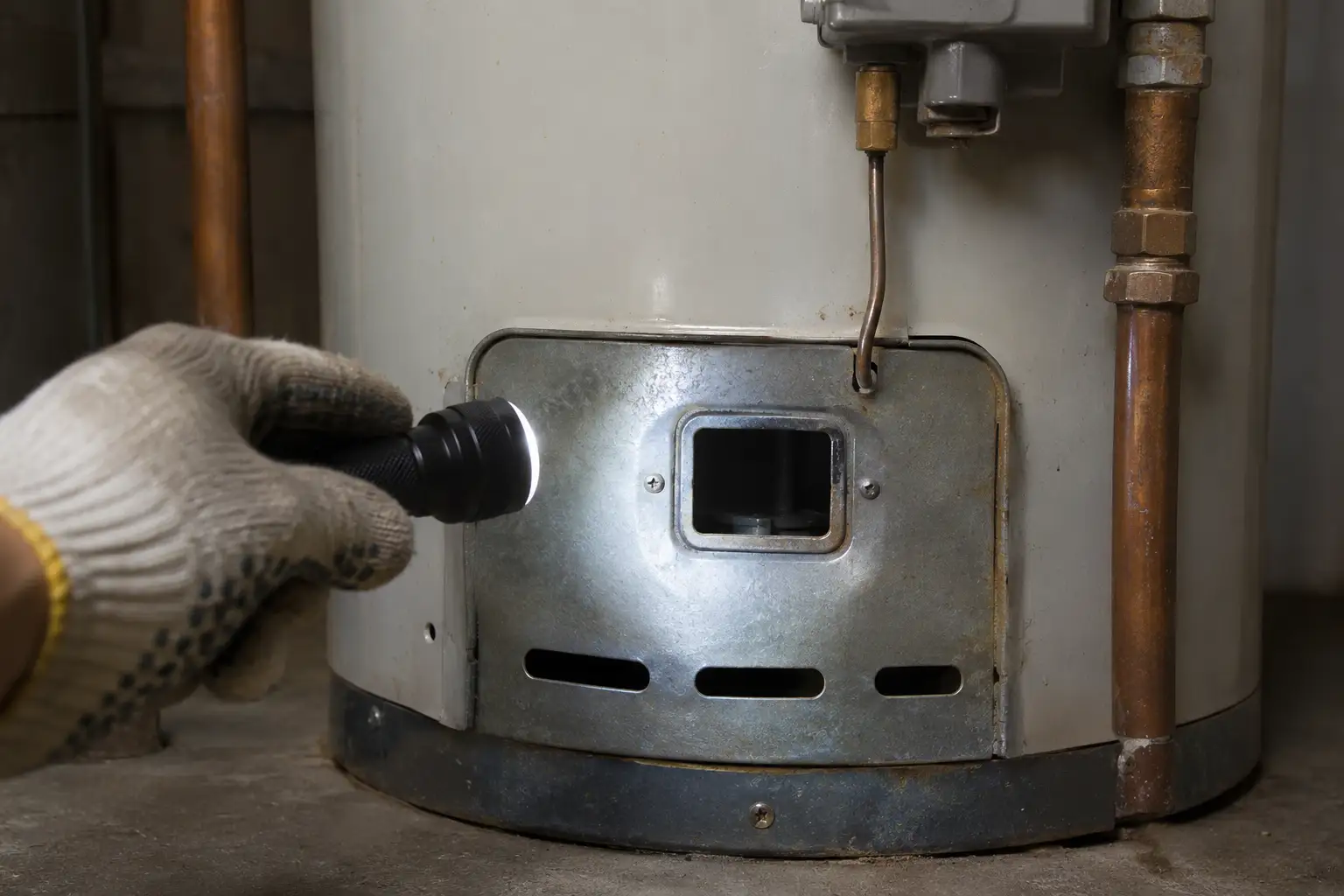
A water heater not working usually comes down to a short list of causes. On a gas tank it is often the pilot or the gas control. On an electric tank it is often a tripped breaker, the reset button or a burned out element. This guide walks through the checks a Cheyenne homeowner can safely make, and the signs that mean you should stop and call.
Water heater not working? Start here
The short answer
Most tanks quit for one of five reasons. The pilot went out, the thermocouple or gas control failed, the breaker tripped, the high limit reset popped, or a heating element burned out. Check those first. If the tank is leaking, the relief valve is hissing or you smell gas, stop checking and follow the safety steps below.
First work out which kind of heater you have. A gas tank has a metal flue pipe rising from the top and a burner compartment near the floor with a small viewing window. An electric tank has no flue, a thick cable running into a box on top, and one or two metal cover plates on the side.
Checks for a gas water heater
Look through the pilot window
Turn off nearby lights and look for a small steady blue flame. No flame means the pilot is out. Many newer tanks have a sealed burner and a status light instead, and the blink pattern is explained on the label.
Confirm the gas is on
The handle on the gas line feeding the heater should sit in line with the pipe. If the stove or furnace also stopped, the problem may be the gas supply to the house rather than the heater.
Relight only by the label
The lighting steps are printed on the tank. Follow them exactly. If the pilot lights but goes out when you let go of the knob, the thermocouple or flame sensor is the likely cause, and that is a job for the technician.
Check the dial setting
Someone may have turned the control to vacation or pilot. Set it back to the normal mark and give the tank time to heat a full load.
If you smell gas, do not relight anything
Leave the house now. Do not switch lights or appliances on or off, and do not use a lighter. Call 911 or the gas company emergency number from outside. A plumber repairs the gas piping only once the emergency is handled. More on gas line repair.
Checks for an electric water heater
Electric tanks have fewer parts, but they run on a high voltage circuit. Most of what you can safely check happens at the electrical panel rather than inside the heater.
- Find the breaker. Look for a double breaker marked for the water heater. If it sits in the middle or off position, push it fully off and then back on.
- Try the reset button. With the breaker off, remove the upper cover plate and fold back the insulation. The red button above the upper thermostat is the high limit reset. Press it firmly, replace the cover, then turn the breaker back on.
- Give it time. A full tank of cold water takes a while to recover. If hot water returns a few hours later, make a note and watch for a repeat.
- Leave repeats alone. A breaker or reset that trips again points to a shorted element, a failing thermostat or a loose wire. Switch it off and call.
Never touch the elements with the power on
The terminals behind the cover plates carry enough voltage to hurt you. If you are not sure you found the right breaker, leave the panels closed and let the technician test it with a meter.
Lukewarm water, noises and smells
A heater that runs but cannot keep up is a different problem from one that is stone cold. On an electric tank, hot water that turns lukewarm after a short shower usually means the lower element has failed. On a gas tank it can point to a broken dip tube, a burner that needs cleaning or a thermostat set too low.
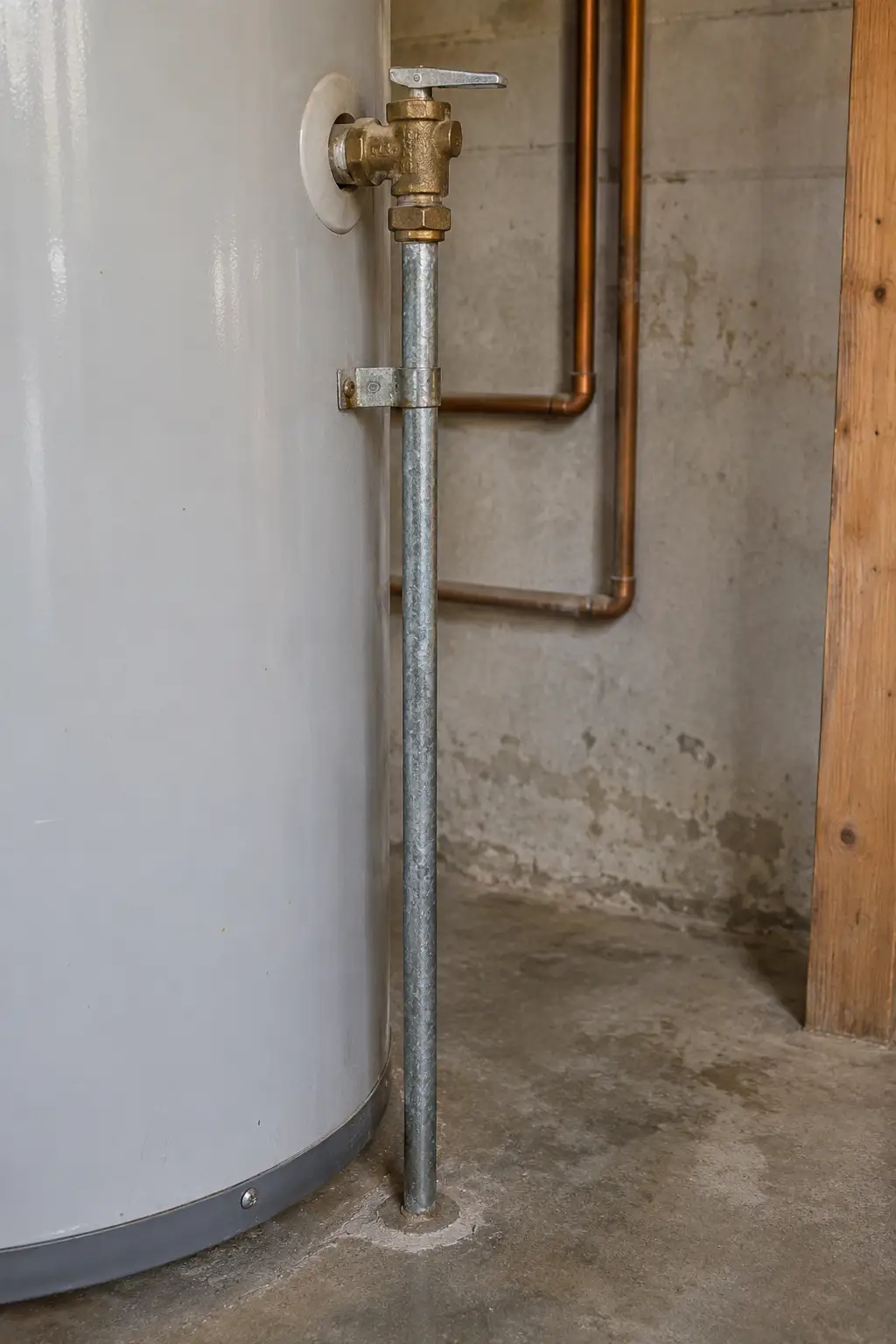
The relief valve opens when the tank gets too hot or the pressure climbs too high. A few drops at the end of its pipe after the tank heats can mean a worn valve or high house pressure. Steady hissing or hot water pouring out means the tank is overheating. Turn off the gas or the breaker and call.
| What you notice | What it usually means | What helps |
|---|---|---|
| Popping or rumbling as it heats | Sediment has settled on the bottom of the tank | A flush, if the drain valve still works |
| Rotten egg smell from the hot water only | Bacteria in the tank reacting with the anode rod | A different anode rod and a thorough flush |
| Rusty or brown hot water | The anode or the tank lining is wearing out | An inspection, and often planning a replacement |
| Hot water runs out quickly | A failed lower element or a broken dip tube | Replacing the element or the dip tube |
| Water far too hot, or the relief valve hisses | A stuck thermostat or gas control | Shut it down and call right away |
A sulfur smell from the hot taps alone is usually the anode, not a gas leak. If you smell rotten eggs near the heater itself or anywhere else in the house, treat it as gas and get everyone outside.
Leaks around the tank
Water around the base is the sign that worries homeowners most, and it is worth finding the source calmly. Dry the floor, then check the fittings on top, the relief valve pipe, the drain valve near the bottom and the seams of the tank.
Call soon
- Water seeping from the tank body or the bottom seam
- A puddle that returns every time you dry it
- Rust streaks and dampness under the outer jacket
- The relief valve dripping steadily or spraying
Usually a smaller repair
- A slow drip at a fitting on the cold or hot line
- A drain valve that weeps from its spout
- Condensation on a gas tank right after a big draw of cold water
- A loose nut on a flexible connector
A leak from the tank itself cannot be patched. Close the cold water valve above the heater, turn off the gas or the breaker, and call us about water heater repair or replacement. If water is spreading toward finished rooms, the guide on shutting off your water helps.
Mistakes that make it worse
- Capping or plugging the relief valve. It is the part that keeps an overheating tank from becoming dangerous. Never block it, even when it drips.
- Pressing the reset again and again. It trips for a reason. Forcing it back on can let the water overheat.
- Relighting a pilot that keeps going out. Repeated tries can let gas collect in the burner compartment.
- Turning the thermostat way up. It will not fix a failed part, and very hot water scalds in seconds.
- Draining an electric tank with the power on. An element that runs dry burns out almost at once.
What the technician checks
When a local technician comes out, the visit starts with the same questions you answered above. Gas or electric, how old the tank is, and what changed just before it stopped.
- On gas tanks, the pilot assembly, thermocouple or flame sensor, gas control valve, burner and the draft at the flue
- On electric tanks, the voltage at the heater, both elements, both thermostats and the high limit switch
- The relief valve, the expansion tank if there is one, and the water pressure coming into the house
- The drain valve, how much sediment is in the tank, and the age and condition of the tank itself
You hear what failed and what the options are before any work starts. A tank that is near the end of its life and leaking is usually replaced rather than repaired, and the technician can explain why. Have the details from the label ready when you call, and see the emergency checklist for what else to note.
Keeping a water heater running in Cheyenne
Cheyenne winters are long and cold, so the water coming into the tank stays cold for months and the heater works harder. A little care each year keeps it going.
- Drain a few gallons from the drain valve once a year to clear sediment
- Lift the relief valve lever briefly once a year with a bucket under the pipe, and make sure it closes again
- Keep boxes and laundry away from a gas tank so the burner gets enough air
- Ask about the anode rod once the tank is several years old
- Keep the thermostat at a moderate setting rather than the top of the dial
The plumbing maintenance checklist puts these tasks into a season by season plan.
Questions people in Cheyenne ask
Why is my water heater not working when the pilot is lit?
A lit pilot with no main burner flame usually points to the gas control valve, a dial left on pilot or vacation, or a dirty burner. On newer tanks the status light code tells the technician more. Check the dial first, and call if the burner still will not come on.
Why does my electric water heater keep tripping the breaker?
A breaker that trips again and again usually means a shorted heating element, a damaged wire or a failing thermostat. Leave it off once it trips a second time. Resetting it over and over can damage the wiring, and the technician needs to test the elements with a meter to find the fault.
How long until I have hot water after relighting the pilot?
A standard tank usually needs somewhere around an hour to heat a full load, and longer in the middle of a Cheyenne winter when the incoming water is very cold. If the water is still cold after a couple of hours, something else is wrong and it is worth a call.
Is a leaking water heater dangerous?
The leak itself is mostly a water damage problem, but it can become a safety issue if water reaches electrical parts or the gas burner. Close the cold water valve above the tank, shut off the gas or the breaker, and keep the area dry until the technician arrives.
Why does my hot water smell like rotten eggs?
Bacteria in the tank can react with the anode rod and give the hot water a sulfur smell. Flushing the tank and fitting a different type of anode usually solves it. If you smell rotten eggs near the heater or in the air, treat it as a gas leak and leave the house.
Should I repair or replace an old water heater?
It depends on the part that failed and the state of the tank. A thermocouple, element or thermostat is usually worth replacing. A tank that leaks from its body or has heavy rust inside usually is not. The technician explains the options and you decide before any work starts.